
Cost Effective and High Quality
CALGARY
PARGING SERVICES
Residential - Commercial
GET A FREE ESTIMATE
TRADITIONAL COLORS
ACRYLIC COLORS

Professional Parging Contractor in Calgary
oatingsParging is the thin layer of cementitious or polymer-modified coating applied to foundation walls to protect, smooth, and extend the life of masonry and concrete surfaces.
Solida Coatings has been helping homeowners, builders, contractors, developers and property managers throughout Calgary and surrounding areas for over 14 years with various parging projects. It is our mission to provide best results for your building’s exterior cladding system.
Solida Coatings is a parging contractor offering coating and cladding services for both residential and commercial properties. Solida Coatings takes on any size and kind of project with ease, using only use top quality materials from reputable suppliers which helps provide better results for your project. Solida Coatings offers free estimates for parging and parging repair projects in greater Calgary and surrounding areas.
Parging Installation
Foundation walls without proper parging, also known as basement walls on houses, office buildings, apartment complexes and various premises are susceptible to various hazards. Furthermore, considering Calgary’s weather, the walls start to crumble and get cracks in time. These cracks can seem unimportant at first, over time they cause major problems such as water leakage into the basement. Damages on parging and concrete should be taken seriously and require immediate repair.
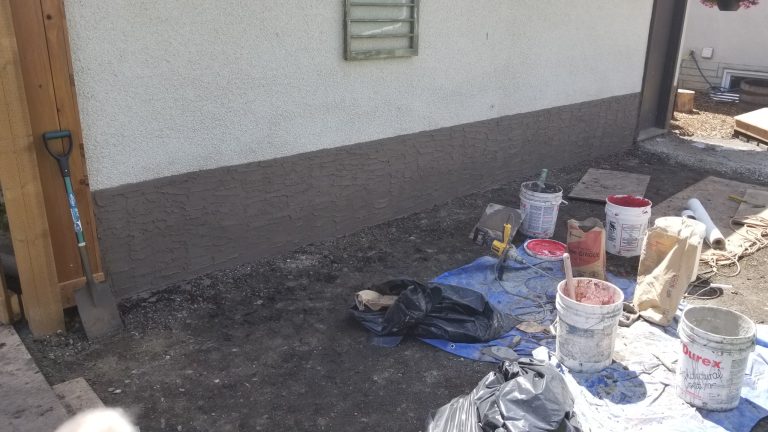
Parging is a thin coating of material which is particularly useful for the foundation and basement walls. It’s an efficient way to cover and strengthen an otherwise fragile surface. Contrary to common belief, concrete walls require protection with the proper parging mix. Parge coat protects the cement and concrete against various external factors and hazards. If needed, flashings and membrane tapes will be applied for additional water control. Then, depending on the clients’ wishes and needs, we will install a textured layer, smooth or acrylic coat. Finished look will not only transform the aesthetics of the building and the foundation, but will also provide an excellent protection and moisture control for many years.
Over the last few years, many foundations on residential homes and commercial buildings have a new system called ICF (Insulated Concrete Forms). This system insulates the concrete with foam and by default, foams are not resistant to dirt, ice, water and wind long term. We offer our ICF parging services and provide various textures and designs.


Parging Repair
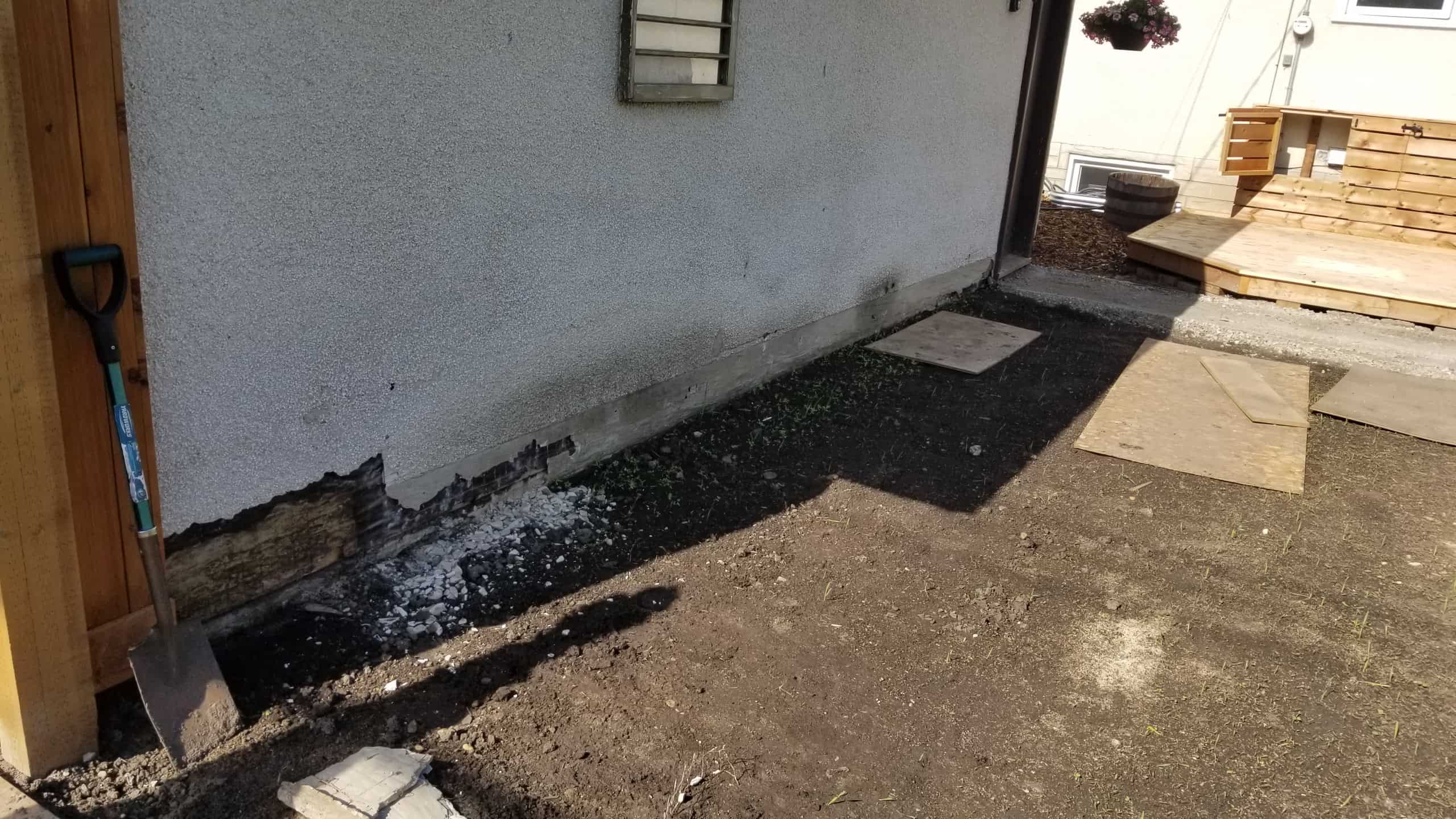
If you have noticed that your parging coat is falling apart, chipping away or crumbling, it’s a good idea to start considering a parging repair service. When the water gets in and freezes due to seasonal conditions, it slowly hurts the parging mix and cause it to fall apart further. If the condition is severe and large sections are chipping off, a parging removal and renewal is recommended.
Parging installation and repair services are quite affordable compared to some other coating and wall systems. Solida Coatings provides free estimates and can start the work right away on the given scheduled date. -weather permitting- Contact us for your free estimate today.
What Is Parging and Why Is It Essential for Calgary Homes?
Parging is a thin protective render applied to foundation walls that creates a bonded sacrificial layer, reducing direct exposure of masonry or concrete to moisture, salts, and mechanical abrasion. Mechanically, parging acts as a barrier and crack-bridging surface: bonding agents and polymer modifiers improve adhesion and flexibility, while the finish coat seals pores and evens aesthetics. For Calgary homes, the benefit is twofold: it mitigates freeze–thaw spalling and reduces chloride intrusion from de–icing salts, which can accelerate deterioration. The next sections break the process into practical steps, show how parging protects foundations, and explain why climate–specific material choices matter for long-term performance.
What Does Parging Involve?
Parging involves site inspection, surface preparation, mix selection, application of one or more coats, finishing, and proper curing to achieve durable adhesion and weather resistance. First, loose material, efflorescence, and oil are removed and any structural cracks or voids are patched; this substrate prep determines adhesion and long-term performance. Next, a bonding agent or polymer-modified base is applied before one or more scratch and finish coats are troweled to the desired profile; reinforcing mesh is used only where needed to bridge larger voids. Proper curing time and protection from early freeze or heavy rain are critical; the following subsection explains the protective mechanisms that make these steps worthwhile.
Freeze-Thaw Cycles and Concrete Durability: Understanding Deterioration Mechanisms The influence of internal saturation on freeze–thaw damage to concrete pavement is a critical factor affecting its long-term performance. Understanding the deterioration mechanism under freeze–thaw cycles is essential for developing effective mitigation strategies and ensuring the durability of concrete structures. Impact of freeze–thaw cycles on the long-term performance of concrete pavement and related improvement measures: A review, W Ma, 2022
How Does Parging Protect and Enhance Foundations?
Parging protects foundations by forming a continuous layer that reduces water penetration, shields the concrete/masonry surface from physical abrasion, and slows chloride ingress that causes steel reinforcement corrosion. The mechanism is simple: a well-bonded parge coat diverts bulk moisture and salts away from the substrate, while flexible mixes and polymer additives help bridge hairline cracks that form under thermal cycling. Aesthetic benefits are significant as well—parging produces a uniform, paintable surface that improves curb appeal and provides a primer for additional waterproofing or coatings. Understanding these protective mechanisms leads directly to why specific materials perform better in Calgary’s climate, which we cover next.
Why Is Parging Important in Calgary’s Climate?
Calgary’s climate subjects foundations to frequent freeze–thaw cycles, seasonal temperature swings, and road salts that can penetrate and deteriorate unprotected masonry or concrete surfaces. In this context, parging materials that offer flexibility and adhesion—such as acrylic-modified or polymer-modified cementitious mixes—better tolerate expansion and contraction without delaminating. Scheduled inspections after winter and careful attention to drainage and splash protection multiply the benefits of parging in cold climates. Choosing the right material and inspection cadence reduces the risk of spalling and costly foundation repairs later on.
Freeze-Thaw Effects on Stabilized Materials: Moisture and Strength Loss The effects of freeze-thaw cycles on the durability of stabilized materials are significant. The vertical distribution of moisture within these materials can influence heave and associated strength loss, impacting their overall performance and longevity. Effects of freeze-thaw parameters on the durability of stabilized materials, 1972
How Much Does Parging Cost in Calgary?
Parging costs in Calgary vary widely because final price depends on site conditions, required repairs, material selection, and access logistics; a clear cost range helps set expectations before getting estimates. Typical pricing models use square–foot or linear–foot metrics and adjust for prep, scaffolding, and finish complexity, with material choice (acrylic vs traditional cement) shifting the estimate considerably. Below we list primary cost drivers and provide an EAV-style comparison to make the pricing structure transparent for homeowners seeking reliable estimates. After understanding the drivers you can compare quotes more effectively and consider risk–reducing steps like bundling repairs or scheduling work outside of peak winter weather.
Parging cost drivers include:
- Surface condition and repair needs, which increase labor and materials.
- Access and scaffolding requirements that add to project time and safety measures.
- Material choice and finish complexity, where polymer-modified or acrylic mixes command higher material costs.
- Warranty offerings and contractor experience, which can impact perceived value and price.
This list clarifies the most frequent variables; the table that follows quantifies typical ranges and impacts so you can see how each factor moves a quote.
Introductory cost comparison table:
Cost Factor | Typical Range | Impact on Estimate |
Labor (prep & application) | Moderate to high | Major driver; increases with repair complexity |
Materials (acrylic vs cement) | Low to moderate | Acrylic/polymer costs higher; improves longevity |
Access & scaffolding | Low to high | Significant for tall foundations or tight yards |
Patch/repair scope | Variable | Extensive repairs raise total substantially |
This table highlights that labor and repairs most strongly influence final cost, so early inspection and minor repairs can reduce the overall estimate. The next subsection explains how to interpret material price differences and warranty trade-offs when comparing quotes.
What Factors Influence Parging Prices in Calgary?
Several practical factors determine the final parging price: substrate condition, required structural or patch repairs, job access, finish style, and time of year when work occurs. Substrate preparation often consumes a majority of labor hours when cleaning, routing out loose material, and repairing spalls are needed, and that increases the per–square–foot rate. Access constraints such as narrow setbacks, landscaping protection, or required scaffolding directly add to labor and equipment costs, while more elaborate textured finishes require additional time. Understanding these cost drivers empowers homeowners to request line-item estimates and identify areas where small prep investments can avoid larger future costs.
How Do Different Parging Materials Affect Cost?
Material selection affects both initial cost and lifecycle performance; acrylic and polymer–modified mixes tend to cost more upfront but offer improved flexibility and adhesion compared with basic cementitious parging. Acrylic parging adds elasticity, which helps bridge thermal movement common in Calgary, reducing crack recurrence and maintenance needs. Traditional cementitious parging is less expensive initially but may require earlier touch–ups or replacement where freeze–thaw damage is significant. Choosing a slightly higher-cost material can therefore lower total ownership cost through fewer repairs and longer warranty–eligible performance.
Material comparison table:
Material Type | Durability | Flexibility | Typical Cost Impact |
Acrylic parging | High | High | Higher material cost; longer life |
Cementitious parging | Moderate | Low | Lower material cost; higher maintenance |
Polymer-modified | High | Moderate | Mid-to-high cost; strong adhesion |
This comparison shows that acrylic or polymer-modified parging, while costlier upfront, typically delivers better resistance to Calgary’s freeze–thaw environment and can reduce long–term maintenance expense.
What Types of Parging Services Are Available in Calgary?
Calgary homeowners can choose among new parging installation, repair and restoration, acrylic or cementitious finishes, and specialized application for ICF foundations; each service addresses specific performance goals. Service providers frequently combine substrate repair, bonding agents, and a finish coat to meet both durability and aesthetic objectives while accounting for local climate stresses. Below we outline common services, typical project steps, and provide a compact EAV comparison of parging types to help match performance needs with budget constraints. After reading this, you will know which service best fits your foundation condition and long–term goals.
Typical parging services include:
- New installation for previously bare concrete or block foundations, including bonding and finish coats.
- Repair and resurfacing for cracked or spalled areas using patching, reinforcement, and skim coats.
- Material upgrades to acrylic or polymer–modified mixes for enhanced flexibility and longevity.
This enumeration clarifies service categories; the following table compares material attributes and suitability for Calgary conditions.
Parging type comparison table:
Parging Type | Durability | Flexibility | Best Use in Calgary |
Acrylic parging | High | High | Freeze–thaw areas, crack–prone walls |
Cementitious parging | Moderate | Low | Budget repairs on sound substrates |
Polymer-modified | High | Moderate | Adhesion–critical repairs and overlays |
This table helps homeowners decide which type aligns with their performance priorities, balancing upfront cost with expected durability and maintenance.
How Is New Parging Installation Done?
New parging installation begins with a thorough inspection and cleaning of the substrate, removing loose material, efflorescence, and contaminants to create a sound surface for bonding. After repairs to any structural cracks or voids, a bonding primer or adhesive is applied, followed by a base or scratch coat and a finish coat that provides the desired texture or smoothness. Application methods vary by material—acrylics are often sprayed and troweled, while cementitious mixes are hand–troweled—and curing time must be protected from rapid temperature swings. Homeowners should expect staging measures to protect landscaping, clear communication about work duration, and a final inspection to confirm adhesion and finish quality.
How Do Professionals Repair Cracked or Damaged Parging?
Professionals assess the size, depth, and pattern of cracking to determine whether localized patching, crack stitching, or full resurfacing is required, prioritizing substrate stabilization before aesthetic finishing. Small hairline cracks may be sealed and bridged with flexible acrylic overlays, while deeper structural cracks often need stitching, epoxy injection, or replacement of damaged block followed by new parging. Repair methods emphasize matching material properties—using flexible mixes where movement is expected—and ensuring proper keying and bonding to avoid future delamination. A quality repair restores protective function and appearance, typically extending service life by years compared to superficial fixes.
What Is Acrylic Parging and How Does It Compare to Cement Parging?
Acrylic parging is a polymer–modified system that offers superior flexibility, adhesion, and resistance to moisture compared with conventional cementitious parging, which is more rigid and less tolerant of thermal movement. The acrylic chemistry improves crack–bridging capacity and reduces micro–cracking during freeze–thaw cycles, making it well suited to Calgary’s variable temperatures. Cementitious parging remains a cost-effective option for stable substrates and lower–budget projects but may require more frequent touch–ups in exposed locations. The trade–off is clear: higher initial material cost for acrylic often yields lower long–term maintenance.
How Is Parging Applied to ICF Foundations?
Applying parging to ICF (Insulated Concrete Form) walls requires adhesives or lath where EPS or XPS insulation is present, and contractors often use compatible polymer–modified base coats to secure adhesion without damaging insulation integrity. Proper substrate preparation includes verifying attachment points, mechanical fasteners if required, and selecting mixes that accommodate the thermal expansion characteristics of ICF systems. Careful detailing at grade, openings, and transitions prevents water tracking and ensures a durable finish. When done correctly, parging on ICF combines the thermal benefits of insulation with a resilient protective surface.
Why Is Local Knowledge of Calgary Soil and Weather Important?
Local knowledge informs material selection, timing, and detailing because Calgary’s freeze–thaw patterns, soil heave potential, and salt exposure uniquely influence parging performance and longevity. Contractors who work regularly in the area understand seasonal windows for safe curing, best drainage practices for local landscaping, and how to detail parging at grade to prevent water intrusion. This experience reduces the chance of premature failure and supports warranty claims when procedures align with local best practices. Prioritizing local experience is therefore a risk–mitigation strategy for long–term foundation protection.
How Do You Maintain and Care for Parging in Calgary?
Routine inspection, timely minor repairs, and attention to drainage are the cornerstones of parging maintenance that extend service life and reduce costly interventions. An annual visual check—especially after winter—catches early signs of delamination, cracking, or staining that indicate moisture problems or salt damage. The section below lists common warning signs and maintenance practices, followed by recommended inspection frequency and simple homeowner actions to preserve parging performance. Implementing these practices keeps parging functional and preserves foundation health.
Common signs that parging needs attention:
- Cracking: Hairline to wide cracks that allow water ingress.
- Flaking or delamination: Areas where coating separates from substrate.
- Bulging or soft spots: Indications of trapped moisture or failed bonding.
These signs suggest specific repair actions described next.
What Are Common Signs That Parging Needs Repair?
Visible symptoms—such as widespread hairline cracking, scaling, localized spalling, bulging, or staining—point to different underlying issues like poor adhesion, freeze–thaw damage, or ongoing moisture ingress. Hairline cracks may be remedied with flexible acrylic overlays while delamination often requires removal of failing parge and reapplication after thorough prep. Bulging or soft areas suggest trapped moisture or compromised substrate and typically need professional assessment and possible partial removal. Prompt action on these warning signs prevents escalation into structural damage and keeps maintenance costs manageable.
How Often Should Parging Be Inspected or Repaired?
A practical inspection schedule recommends an annual check and an additional inspection after severe winters or heavy freeze–thaw events to catch early deterioration. Post–winter inspections are particularly valuable in Calgary because they reveal the cumulative effects of salt, freeze–thaw cycling, and snowmelt on the parged surface. Minor repairs should be undertaken promptly—small patches and touch–up coats prevent water penetration that accelerates damage. Scheduling preventative inspections with a qualified contractor every 1–3 years depending on exposure helps preserve warranty validity and reduce lifecycle costs.
What Are Best Practices for Long–Lasting Exterior Parging?
Best practices include ensuring positive drainage away from the foundation, protecting parging during initial curing from rapid temperature swings, avoiding direct contact with de–icing salts on the finish, and selecting flexible, polymer–modified materials where movement is expected. Landscaping should slope away from the foundation and downspouts should be routed to minimize splashback; these simple measures reduce moisture load on the parging. Regular cleaning of the surface to remove salts and debris, combined with prompt patch repairs, preserves adhesion and appearance. Adhering to these practices maximizes lifespan and reduces the need for large–scale resurfacing.
Which Exterior Finish Is Better for Calgary Homes?
Choosing the right finish depends on priorities: budget and simple protection favor parging at the foundation, while full aesthetic cladding and architectural character favor stucco above grade; hybrid detailing often gives the best of both worlds. For foundation protection in freeze–thaw zones, polymer–modified or acrylic parging is generally recommended; when complete wall aesthetics and color are desired, a properly designed stucco system provides more finish options. Evaluate priorities—durability, appearance, and budget—and consult contractors with local experience to select a system that balances these trade–offs.
Traditional Parging Colors for Classic Calgary Exteriors
Every project is unique and requires a different approach. Working with variety of suppliers and manufacturers ensure that we deliver the best results.





FREQUENTLY ASKED QUESTIONS
What is parging?
Parging is a thin layer of coating that is mainly used to cover foundations, retention walls and masonry-based structures. It consists of cement, sand, lime, adhesive, mesh and plaster of all kinds depending on the requirements and project needs. Usually, it’s an exterior coating that offers protection to the substrate that it’s applied on.
It’s also known as foundation stucco.
What is the purpose of parging?
Parging is a useful coating system that protects the foundations against hazardous elements such as weather, rain, ice, pests and dirt.
Compared to the poured concrete, ICF and plywood walls, it provides aesthetics with various designs and textures. It offers moisture and water control. It is recommended to apply a parge coat for an additional layer of water control prior to doing work below the ground on foundations. (Canadian Wood-Frame House Construction, 2013)
Can I do parging myself? (DIY TIPS)
Yes. With some hard labour work and experience in using the right tools, it’s possible, however it’s not considered a DIY project for most people. It is recommended that you try your hand on fixing the cracks and applying small patches first.
Here is a list of to do things that you should follow;
- Clean the concrete from bumps and metal pieces that are sticking out. If there is an existing parging, remove all loose and crumbling parts. For the remaining parts and sections, use a good amount of force to check that they are solid and strong in place.
- Clean the work area.
- If there are wooden pieces on the concrete walls such as support beams or 2×4 or such lumber on the side of the doors etc, apply a product such as water‐based copolymer rubber air barrier or install a metal lath to help the parge mix to stick to such surfaces. If the foundation is ICF (Insulated Concrete Forms), the best practice is to use fiberglass mesh embedded in coating.
- Clean and scrape the concrete walls, then use water for a thorough clean up. For ICF foundations, use a rasping tool to level the surface and help parge mix to stick on it better. If water-based copolymer air barrier used on the wooden walls, the product should be dry.
- Apply concrete bonding adhesive on concrete walls, the adhesive should be visible and damp on the walls before application.
- Use the right tools such as trowels, apply the parge mix onto the wall. Press the trowel to the walls at an angle using the necessary force so that the parge mix sticks nicely.
- On plywood walls and ICF foundations, use mesh embedded in parging.
- Depending on your choice of texture, make the parge coat as smooth as possible. It is recommended that for some textures such as acrylic finishes, the parging should be as smooth as possible. However, traditional parging textures does not require the main layer to be smooth as much since the texture itself covers imperfections.
- Clean the work area.
Where to buy the materials?
There are various suppliers and manufacturers that provides the necessary materials for a parging project. However, concrete adhesive and some materials require a little bit more research.
How long for it to cure?
Depending on the thickness, parging requires at least 2 days for it to settle and dry nicely. It takes up to 3 months for it to cure completely and become durable and rigid.
How to maintain?
When it is wet, don’t touch it. You can clean the parging using a hose nozzle or a brush after couple of days.
Can I paint the parging?
You can after it cures however, good quality exterior stucco paint would be the best to use. We don’t recommend using elastomeric based paints, even if it says stucco paint on it. Elastomeric paints are rubbery and has waterproofing qualities, parging like traditional stucco needs to breathe and moisture is actually good for it.
Why does my parging fall off and crumble?
- Usually due to lack of expertise and wrong material usage. The parge coat and concrete wall that it’s applied to should be both wet, meaning that concrete wall must be washed and using a concrete bonding agent is highly required. If the base is too dry, it can make the parge mix dry out faster than required and cause an improper sticking to the substrate.
- The sections of a building such as garage or foundation shifting can cause parging to get deep cracks and make it fall off in sections.
- Improper installs on substrates such as foundation tars and membranes can also cause parging to fall of.
- During the settling process, the parging is brittle and susceptible to crumbling. It is very durable and tough after it cures.
Why does my parging has cracks?
The reason is that it absorbs moisture and during winter this water freezes, which expands in solid form which then thaws and becomes liquid, leaving expanded openings which turn into cracks, similar to asphalt road potholes.
Can I install parging over foundation tar?
Yes. A metal mesh needs to be installed on the concrete on top of the tar. Parge mix does not stick to the foundation tar.
Can you install parging over dimple wraps?
No you cannot.
However, it’s possible installing parging on the foundation by lowering the dimple wraps to the ground level using the right techniques without compromising the safety of the dimple wrapping by following the requirements of the manufacturer.