
Cost Effective and High Quality
TRADITIONAL CEMENT PARGING
Residential - Commercial
GET A FREE ESTIMATE
COLORS TO CHOOSE FROM

Traditional Cement Parging: Key Benefits, Materials & Textures
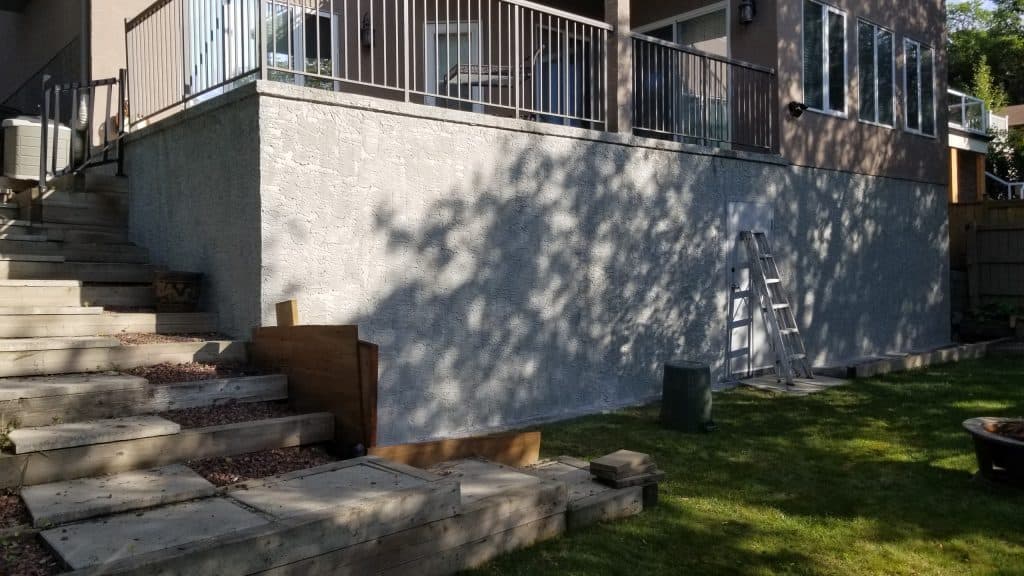
Traditional parging consists of a thick layer of a parge coating that has Portland cement, hydrated lime and dried masonry sand. It offers benefits such as water control, elegant looks and protection for foundation and retention walls. It has various textures, most commonly used is the skip-trowel texture that is applied by a putty knife or a trowel to give it a wavy look, or a smooth texture that is rendered by a sponge float.
A wall coating system such as parging not offers protection against dirt, water, ice, snow and sun, it also offers beautification of the walls that is eye-catching. Poured concrete foundation walls tend to get weak over time to due to exposure of hazardous elements. Concrete gets little holes that get bigger over time and start crumbling in places, not to mention the unflattering looks that causes decrease in value of the property. Substrates such as pressure treated plywood and ICF foundations can also use the beautification that is offered by a parging that offers attractive looks.


Parging Install Process
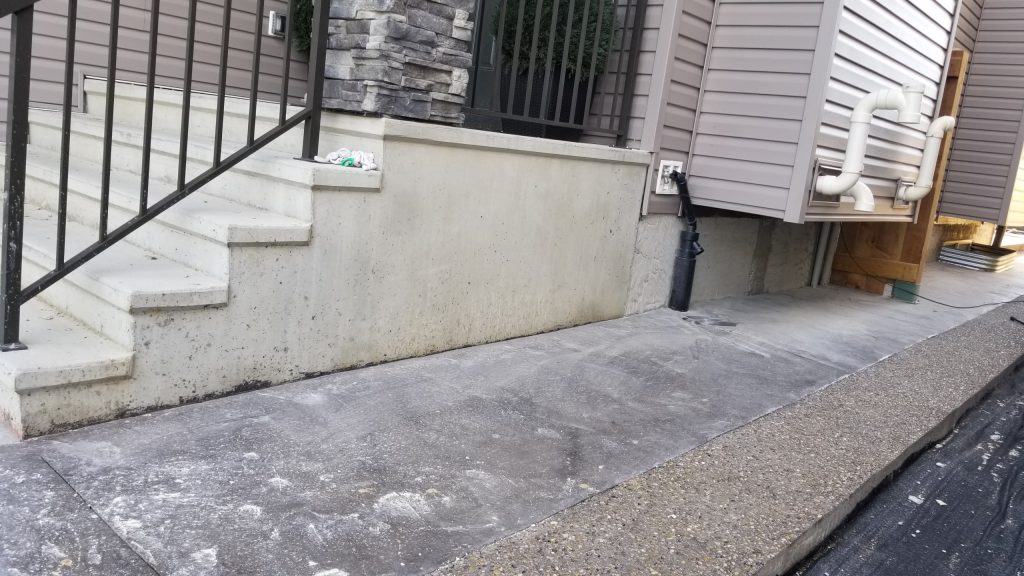
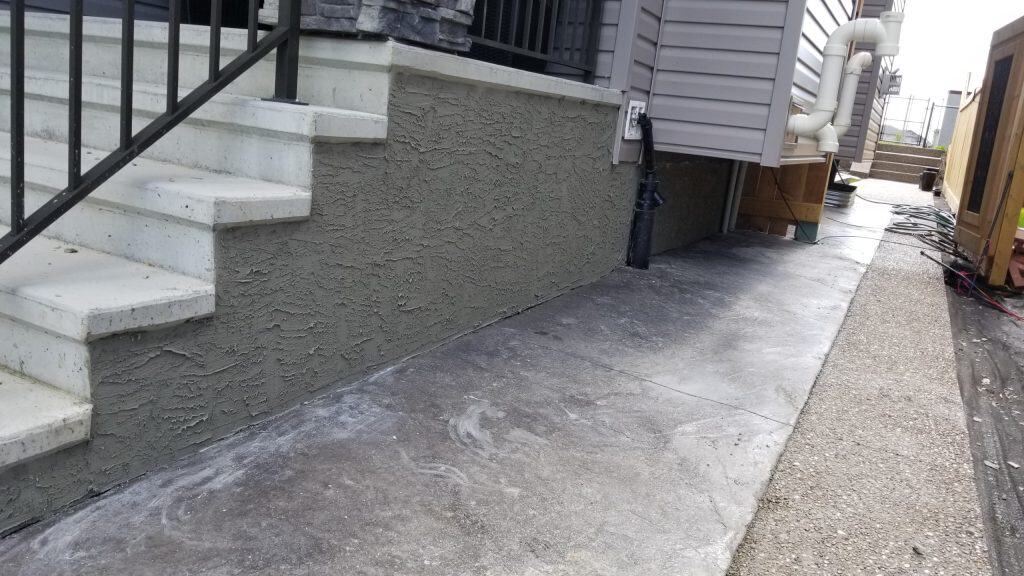
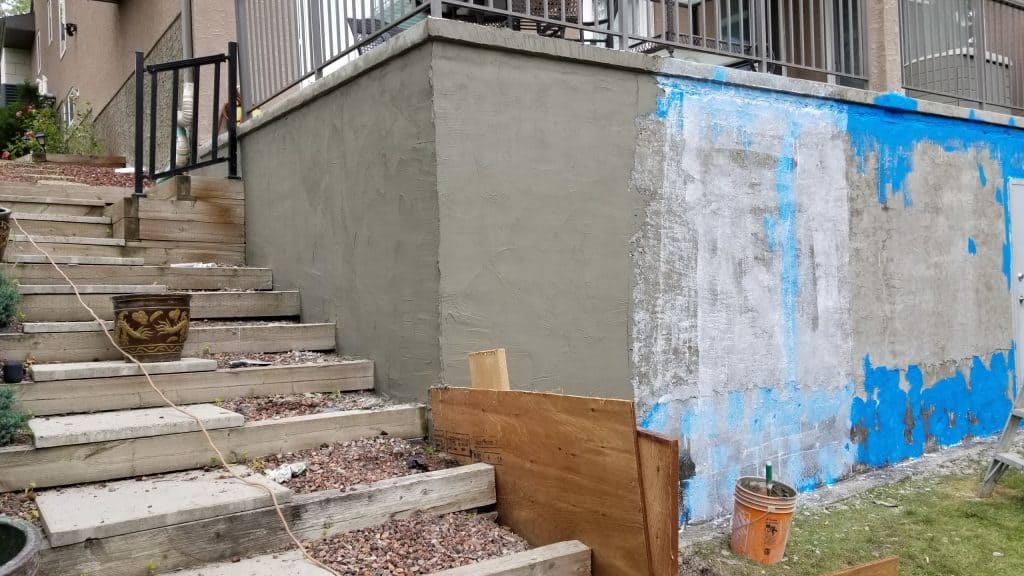
On a poured concrete foundation, we start by cleaning the bumps and deformations on the wall. However, in case that there is an existing parging and there are parts that are falling apart or weak, it’s a necessity to remove those and make sure the remaining parts are solid and strong in place. If there are landscape rocks, we will move them away from the foundation and lay down drop cloths. We then wash the walls and make sure it’s clean from dirt and debris. We then apply the concrete bonding adhesive on to make the surface sticky so that the parge coating can stick better. A thick coat will be applied and when it is relatively damp, a textured layer will be applied whether it’s a skip trowel, smooth and patterned textured design.
Premises will be cleaned from work related debris and final touch ups will be completed.
Traditional Parging Repair
Assuming that there are parts of parging that are falling apart, crumbling or have color deformations, repairs would be a good idea to get the parging back in shape. Usually, if there is a part that is falling off, the area that is around might be weak as well and will have to removed. The wall be washed and concrete bonding adhesive will be applied while the wall is damp. Then a parge coat will be applied, then we’ll match the texture to the remaining parts.
However, the best practice would be to install parging on the whole section instead of just the area that requires repairs, since the color of the coating would be different and would be unappealing.
Parging installs and repairs offer aesthetic beauty to foundation walls while providing an extra layer of protection against various hazards. It’s a great idea to get your foundation walls look good while protecting the basement. Give us a call or shoot us an email and we’ll get back to you promptly.
What Is Traditional Parging and Why Is It Important?
Traditional parging is a cement-based coating applied in thin layers to masonry or concrete to create a continuous protective surface that resists moisture and weathering. The mechanism is simple: a bonded cementitious coat fills small voids, limits water ingress, and evens surface stresses that otherwise create spalling and delamination. The direct benefit is extended substrate life and improved appearance, which reduces long-term maintenance and can help with minor air-sealing around the foundation perimeter. Understanding these basics leads directly into what the process involves and why correct materials and prep are essential for performance.
What Does Traditional Parging Involve?
Traditional parging involves preparing the substrate, applying a bonding primer or admixture, and then troweling on one or more thin cementitious coats to a controlled thickness. Typical materials include Portland cement, properly graded sand, water, and sometimes lime or proprietary additives that modify workability and setting behavior. The workflow follows a predictable sequence: clean and repair the wall, apply bonding agent, place the parge coat(s), and then control curing to avoid premature drying or freeze-thaw exposure. Proper thickness control and timing ensure the coat bonds and cures into a cohesive protective membrane rather than delaminating from the substrate.
How Does Parging Protect Foundations?
Parging protects foundations by forming a physical barrier that reduces capillary water movement into porous masonry and smooths stress concentrations that would otherwise initiate surface failure. By bridging hairline cracks and covering exposed aggregate, the parge layer reduces localized moisture retention and limits the freeze-thaw cycles that cause spalling. This moisture-control mechanism improves long-term durability and lowers the risk of interior dampness when combined with good site drainage. Recognizing these protective roles clarifies why parging is often paired with grading and drainage fixes for holistic foundation health.
What Are the Aesthetic Benefits of Parging?
Beyond protection, parging creates a visually uniform surface that conceals mismatched mortar, patched blocks, efflorescence, and other blemishes on foundation walls. Finishes can be left smooth for a clean look or textured to mimic stucco or trowel-applied patterns, enabling homeowners to match exterior aesthetics without full cladding replacement. Because parging accepts paint and breathable sealers, it also serves as an aesthetic substrate that can update curb appeal efficiently. These visual advantages make parging attractive for both repair-driven and cosmetic projects, while still preserving the protective function.
How Does Parging Improve Energy Efficiency?
Parging improves energy efficiency primarily through air-sealing and by reducing uncontrolled moisture movement that undermines insulation performance near the foundation plane. A sound parge coat closes small gaps and irregularities that create thermal bypasses, and when combined with exterior insulation systems or proper interior insulation detailing, it reduces point heat loss. The effect is not the same as adding continuous insulation, but parging complements thermal upgrades and contributes measurable reductions in draft-related heat loss. Understanding this complementary role helps homeowners prioritize parging when the goal includes improving comfort and lowering minor thermal inefficiencies.
What Surface Preparation Is Needed Before Parging?
Effective surface preparation begins with removing loose material, efflorescence, and deteriorated mortar so the new parge coat bonds to solid masonry or concrete. Cleaning typically uses a wire brush, chisel or grinder for scaled areas, and pressure washing at appropriate settings to remove dust and salts; areas with active decay require deeper repair before parging. Pre-wetting the substrate to a damp but not puddled condition, plus applying a recommended bonding agent or slurry, promotes adhesion and reduces rapid moisture loss from the fresh parge. Careful prep reduces the risk of delamination and sets the stage for successful mixing and application techniques explained next.


How to Mix the Right Parging Mix?
A reliable parging mix starts with Portland cement and well-graded masonry sand at a workable ratio, often around 1 part cement to 3-5 parts sand by volume, with water added to reach a paste that holds shape without sagging. Optional lime can improve workability and open time, while polymer bonding agents increase adhesion and flexibility in exposed climates; additives should be dosed per manufacturer guidance. Mixing in a barrel mixer or paddle on a drill produces a consistent slurry; the goal is a cohesive, trowelable consistency that will not slump on vertical surfaces. Checking workability with a small test application ensures the mix spreads smoothly and accepts finishing without excessive bleed or shrinkage.
Which Tools Are Essential for Parging Application?
Essential hand tools include a masonry trowel for placing material, a hawk or pan to hold the mix, a wooden or magnesium float for smoothing, and a sponge or damp cloth for final texture control. For larger jobs, a mortar mixer or paddle mixer improves consistency and reduces fatigue, while grinders or wire brushes aid preparation and power washers clean residue before bonding. Safety equipment—dust mask, gloves, eye protection, and knee pads—protects the installer during prep and application; appropriate scaffolding or ladders provide stable access on taller walls. Knowing which tool applies to each stage streamlines work and reduces the risk of common mistakes during finishing.
What Are the Best Application Techniques for Smooth and Durable Parging?
Best practice is to apply thin, controlled coats—typically 3/16″ to 1/4″ per lift—allowing initial set before any secondary finishing to avoid shrinkage cracks, and to feather edges to blend into adjacent areas. Maintain consistent gauge thickness across the wall and use straightedges or guides when leveling longer runs; a final float and sponge finish control texture and compaction. Timing is critical: do not overwork the surface, and control curing by protecting from wind and sun or using damp-curing methods to prevent premature drying. Avoid common errors like over-wetting, overly dry mixes, or neglecting bonding agents, all of which lead to adhesion failure.
How Is Mesh Reinforcement Used in Advanced Parging?
Mesh reinforcement (alkali-resistant fiberglass or metal lath) is embedded in the parge coat when substrates have large cracks, settlement joints, or when a thicker repair build-up is required to bridge discontinuities. The mesh distributes tensile stresses and reduces the risk of crack propagation by creating a pseudo-flexible layer within the cement matrix; proper embedment near the middle third of the coat thickness maximizes effectiveness. Installation involves fixing the mesh to sound substrate, overlapping edges correctly, and troweling the first coat to fully encapsulate the reinforcement before applying a finish coat. Mesh is optional for simple cosmetic parging but recommended for structural repair scenarios or when freeze-thaw exposure is severe.
What Are the Common Parging Problems and How Can You Repair Them?
Common parging problems include hairline and structural cracks, spalling, delamination from poor adhesion, and staining from efflorescence or biological growth; understanding cause and detection methods leads to effective repairs. Repairs rely on matching material properties and following systematic remediation: remove unsound material, restore substrate integrity, apply appropriate bonding treatment, and place compatible parge mixes with controlled curing. A diagnostic table below summarizes problems, typical causes, detection cues, and repair actions to guide homeowners and technicians through practical fixes.
The following matrix helps prioritize repairs and choose appropriate methods quickly.
Problem | Probable Cause / Detection | Repair Steps / Prevention |
Hairline cracks | Thermal movement or shrinkage; visible thin lines | Clean crack, apply bonding slurry, fill with cementitious patch or flexible sealant; monitor drainage |
Spalling | Freeze-thaw, salt attack, or corroding reinforcement; flakes or pits | Remove loose material, expose sound substrate, apply patch layers with mesh if deep, seal and improve drainage |
Delamination | Poor prep or rapid drying; bulging or hollow-sounding areas | Remove loose parge, clean substrate, roughen surface, use bonding agent and reapply in thin coats |
Efflorescence/staining | Salt migration or trapped moisture; white deposits or staining | Clean deposits, address source moisture, apply breathable sealer and ensure proper drainage |
How to Identify and Fix Cracks in Parging?
Identifying cracks starts with assessing width and continuity: hairline cracks under 1/16″ often indicate shrinkage and can be patched, while wider or moving cracks may signal structural issues requiring investigation. For minor hairline cracks, clean with a wire brush, apply a bonding slurry, and fill with a cementitious patch or polymer-modified mortar; finish to match surrounding texture and allow controlled curing. For wider cracks, widen the crack to create a U-groove, insert mesh if needed, and use a flexible repair mortar or epoxy injection depending on moisture and movement. Monitoring repaired cracks over seasons helps determine whether underlying movement persists and whether professional structural advice is necessary.
What Is Spalling and How Do You Repair It?
Spalling is surface loss where flakes or chunks of masonry detach, commonly caused by freeze-thaw cycles, salt crystallization, or corrosion of embedded metals, and it shows as pitted or flaking areas. Repair begins with removing unsound material back to solid substrate, exposing any corroded components, and cleaning away salts or contaminants before applying a compatible repair mortar. Deep spalls typically require layered patching with fiber reinforcement or embedded mesh to restore thickness and prevent recurrence; finish coats should match adjacent parge texture and be properly cured. Preventive measures include improving drainage, replacing failing flashings, and using mixes with adequate air entrainment or flexible additives in cold climates.
Can You Parge Over Old or Damaged Parging?
Overcoating old parging is possible when the existing layer is well-adhered, sound, and free of active spalling or movement; perform a tap test and selective removal to verify adhesion. If adhesion is sound, thoroughly clean the surface, mechanically profile or scarify glossy or smooth areas, apply a bonding agent, and then place a thin new parge coat designed for overlay. If the old parging shows widespread delamination, spalling, or hollow areas, remove unsound material back to substrate before reapplying; failing to remove bad areas risks repeated failure. Proper assessment and preparation ensure that overlays perform as intended rather than acting as temporary cosmetic fixes.
How to Prevent Future Damage to Parging?
Prevention focuses on controlling the moisture lifecycle around the foundation: maintain positive grading, extend downspouts, repair site drainage, and manage vegetation that traps moisture against walls. Routine sealing with breathable sealers, seasonal inspections for hairline cracking, and prompt repairs of minor damage significantly extend service life. Additionally, choosing mixes and additives suited to local climate—air-entrained or polymer-modified mixes for freeze-thaw regions—reduces susceptibility to spalling. Regular maintenance and drainage control complete the protective strategy and reduce the need for major remediation.
What Are the Different Parging Mixes and How to Choose the Right One?
Selecting the right parging mix depends on substrate, environmental exposure, desired flexibility, and finishing needs; mixes range from traditional Portland cement/sand blends to polymer-modified cement and acrylic formulations. The mechanism that distinguishes mixes is modification: polymers and fibers improve adhesion and toughness while standard cement mixes prioritize compressive strength and permeability control. Below is a comparison table of common mix types, their components and reinforcement approaches, and typical best-use scenarios to guide selection. After the table, decision guidance condenses the criteria into actionable recommendations for common foundation types and climates.
Here is a concise comparison of mix types to simplify selection.
Mix Type | Components / Reinforcement | Best Use / Performance Notes |
Cement-based (traditional) | Portland cement, well-graded sand, optional lime | Best for general repairs and basic protective coats; high compressive strength |
Polymer-modified cement | Portland cement + polymer admixture | Improved adhesion and flexibility; better bond to old surfaces and resist moisture cycling |
Fiber-reinforced | Cement mix + synthetic or glass fibers | Enhanced crack control and impact resistance; good for thin builds and spall repair |
Acrylic-based parge | Acrylic binder with fine aggregates | Highly flexible and water-resistant; suitable for exterior finishes and mild repairs |
What Are the Components of a Traditional Cement-Based Parging Mix?
A typical cement-based parging mix contains Portland cement for strength, clean, well-graded sand for bulk and reduced shrinkage, and water to produce a trowelable paste; small amounts of lime may enhance workability. Cement provides binding and compressive capacity, while sand grading affects texture, shrinkage, and visual finish; coarser sands reduce shrinkage but increase texture, whereas fine sands produce smoother finishes. Water-to-cement ratio controls strength and shrinkage—use the minimum water for workable consistency—and mixing technique ensures homogeneity. Understanding these component roles allows tailoring the mix to the finish and durability targets for each job.
How Do Bonding Agents and Fiber Mesh Improve Parging Mix?
Bonding agents (acrylic or polymer emulsions) chemically link the new parge coat to old masonry, increasing tensile adhesion and reducing risk of delamination, while fibers distribute tensile stresses and limit crack propagation. Together they convert a brittle cement layer into a tougher, more flexible surface that tolerates minor movement and freeze-thaw cycles better than plain mixes. Practical guidance: dose bonding agents per manufacturer instructions and ensure full encapsulation of mesh to avoid corrosion or bond loss; select alkali-resistant meshes for longevity. These reinforcement strategies are particularly valuable when overlaying older parge or when site exposure is severe.
Polymer-Modified Cement Mortars for Durable Foundation Repair Polymer-modified cement mortars exhibit excellent adhesion strength and durability, making them widely employed as repair materials. This facilitates the conservation of damaged or obsolete structures, thereby reducing mass, energy, and pollutant flows. 1. Concrete holds a significant position in the construction industry, yet it possesses certain limitations. To address these drawbacks, the development of durable and sustainable construction materials is currently imperative. This has spurred the creation of concrete composites, which combine various compounds for diverse applications in the realm of cement concrete. Enhanced knowledge of material behavior, particularly concerning admixtures, and a deeper understanding of curing processes have enabled the development of high-performance mineral or modified mineral concretes, mortars, and grouts. Significant research efforts are being dedicated to concrete incorporating fibers and polymer-modified concrete to improve the properties of traditional concrete. Both fields acknowledge, pursue, and accept each other’s contributions to the synergistic effects achieved by combining conventional building materials with polymers. This paper provides a brief review of the application of concrete composites with polymers, where polymers exist as a polymerized matrix intermingled with hydrated cement paste. The microstructure and Polymer-modified concrete, 2015
The enhanced adhesion and flexibility provided by polymer-modified cement mortars make them a superior choice for foundation repairs, especially when bonding to existing structures or enduring challenging environmental conditions.
What Are the Differences Between Cement-Based and Acrylic-Based Parging Mixes?
Cement-based mixes emphasize compressive strength and compatibility with traditional masonry, but they are less flexible and more prone to shrinkage; acrylic-based mixes offer greater flexibility, faster rain tolerance, and improved adhesion to difficult substrates. Acrylic systems often return a more water-resistant, paintable surface and can be applied thinner with lower risk of cracking, while cementitious systems are often preferred where structural compatibility and breathability with masonry are priorities. Choose acrylic in high-moisture or flexible finish scenarios and cementitious for structural repairs and when matching existing masonry behavior. The selection balances durability, finish preference, and local climate demands.
How to Select the Best Parging Mix for Your Foundation Type?
Decide based on substrate condition, climate exposure, and desired finish: use polymer-modified or acrylic mixes for highly weathered walls or freeze-thaw climates, and standard cement mixes for sound masonry where breathability is important. For deep repairs or uneven substrates, incorporate fiber reinforcement or mesh to control cracking and support thicker build-up. When in doubt, test a small area to ensure adhesion and finish compatibility, and consult suppliers for product data on freeze-thaw resistance and bond strength. These selection rules help streamline material choices for common foundation scenarios.
How Does Traditional Parging Compare to Stucco?
Parging and stucco share family traits as exterior cementitious coatings but differ in composition, system complexity, thickness, and performance expectations; parging is a thin protective coat while stucco is a multi-layer cladding system designed for finish and structural tolerance. The comparison hinges on layer structure, flexibility, and finish options—stucco systems typically involve scratch, brown, and finish coats over lath and include specific control joints, whereas parging is generally a single thin coat over masonry. A compact comparison table follows to clarify composition, application, durability, and cost tradeoffs for homeowner decision-making.
Below is a direct comparison to clarify decision factors for homeowners and pros.
Material | Composition / Application | Durability / Cost |
Traditional Parging | Thin cementitious coat (single or two thin lifts) applied directly to masonry | Lower material cost, quicker application, good moisture control; limited thickness and finish variety |
Stucco (traditional) | Multi-coat system over lath (scratch/brown/finish) with possible polymer modifiers | Higher labor & material cost, greater finish options, improved crack control with joints and lath |
Acrylic / Synthetic Finishes | Polymer-based finish coatings | Higher flexibility and water resistance, often used as topcoat over parge or stucco |
What Are the Composition Differences Between Parging and Stucco?
Parging usually consists of a cement-sand slurry or thin mortar, whereas stucco is a layered assembly that may include lath, reinforcement, and multiple coats with controlled thicknesses. The different compositions create distinct mechanical behaviors: parging bonds directly to sound masonry and provides a thin barrier, while stucco’s layers and lath accommodate movement and allow thicker textured finishes. These composition differences drive selection: choose parging for economical protection and stucco for comprehensive exterior resurfacing.
How Do Application Methods Differ for Parging vs. Stucco?
Application of parging is typically direct-trowel placement in thin coats onto prepared masonry, requiring less time and fewer accessory materials; stucco requires lath or substrate preparation, multiple coats, and often more skilled labor for uniform results. Stucco installation includes specific sequencing—scratch, brown, and finish—plus attention to control joints and flashings, increasing labor hours and cost but delivering a durable, decorative cladding. The workflow differences explain why parging suits repair and foundation work, and stucco suits full exterior finishes where aesthetics and engineered performance are priorities.
What Are the Functional Differences: Protection, Durability, and Aesthetics?
Functionally, parging delivers protection and modest aesthetic improvement with lower cost and quicker turnaround, while stucco provides greater durability, design flexibility, and crack-control features when properly installed. Expected lifespans favor stucco for large exterior cladding projects, particularly when combined with proper drainage planes and detailing; parging is ideal for targeted protection of foundations and masonry that require breathability. The tradeoff is cost versus finish and engineered performance, guiding homeowners to match solution to project scope.
How Do Costs Compare Between Parging and Stucco?
Cost differences reflect materials and labor: parging uses less material and fewer labor hours, making it the lower-cost option for protecting foundations, whereas stucco incurs higher labor and material expenses due to multiple coats, lath, and finishing. Factors that increase price include difficult access, extensive substrate repair, mesh reinforcement, and specialized finishes. Homeowners should weigh the added longevity and appearance of stucco against the practical protection and lower price of parging when budgeting for exterior work.
How to Maintain and Extend the Lifespan of Traditional Parging
Maintaining parging centers on routine inspections, prompt minor repairs, cleaning and compatible sealing, and addressing site drainage and vegetation that trap moisture. The mechanism of longevity is proactive moisture management plus timely patching of minor defects before they escalate into spalling or delamination. Below, inspection and cleaning best practices, guidelines for resealing or reapplying parging, and environmental considerations are provided so owners can create a sensible maintenance schedule and reduce the need for major repairs.
What Are the Best Practices for Inspecting Parging Regularly?
Inspect parging seasonally, looking for hairline cracks, bulging or hollow-sounding areas, efflorescence, and areas of repeated wetting at grade or near downspouts. Perform a tactile check by tapping suspicious areas to listen for hollow sounds and use a small probe to verify adhesion in questionable spots; photograph and mark changes over time to detect progressive movement. An annual formal inspection before winter allows repairs to be completed in favorable conditions and prevents freezing-related expansion. These inspection practices reduce the risk of unnoticed failures and guide timely maintenance actions.
How to Clean and Seal Parging Surfaces?
Cleaning should remove dirt, biological growth, and efflorescence using low-pressure washing and mild detergent; avoid high-pressure settings that can erode the parge surface. After cleaning and full drying, apply a breathable masonry sealer appropriate for the mix type—polymer-compatible sealers for acrylic-modified parges and silane/siloxane treatments where breathability and water repellency are needed. Do not use non-breathable paints that trap moisture inside masonry; compatible sealers maintain vapor permeability while reducing liquid water penetration. Proper cleaning and sealing extend life and preserve appearance while minimizing trapped moisture issues.
When Is Reapplication or Professional Repair Recommended?
Reapply or engage professionals when damage is widespread, when delamination or structural movement is evident, or when repeated small repairs fail to hold—these are indicators that underlying issues like drainage or foundation movement must be addressed. Professionals can evaluate structural causes, install mesh reinforcement or full removal/rebuild where necessary, and apply warranties or quality controls beyond DIY scope. For isolated hairline cracks and small spalls, DIY patching suffices; for pervasive failures or water intrusion into living spaces, prioritize professional assessment and repair. Clear thresholds protect homeowners from costly repeated repairs.
How Do Environmental Factors Affect Parging Durability?
Climate drives mix and technique choices: freeze-thaw regions benefit from air-entrained or polymer-modified parges, coastal zones require salt-resistant materials, and humid climates demand breathable finishes to avoid trapped moisture. Site features—poor grading, downspout proximity, nearby vegetation, and exposure to de-icing salts—accelerate deterioration if not mitigated. Adjust material choice and curing practices to local conditions, such as using slower-setting mixes in hot, dry weather and protective curing in cold or windy conditions. Adapting methods to environment reduces failure risk and extends service life.
Pargetting for Improved Thermal Performance in Historic Buildings The findings indicate that while the thermal conductivity of pargetting is not exceptionally low, its increased thickness, and crucially, the sealing of the typical poor interface between timber framing and infill materials, do contribute to an external envelope exhibiting superior thermal performance compared to many historic timber-framed structures. Simulations reveal that while the application of internal wall insulation would further enhance this performance, it would concurrently elevate the risk of frost damage. This underscores the complexities inherent in sustainable building conservation. Building performance evaluation of a 14th century Pargetted House: hygrothermal comfort and energy efficiency, CJ Whitman, 2020
The application of pargetting, particularly in historic buildings, can significantly enhance thermal performance by sealing gaps and increasing wall thickness, though careful consideration of moisture management is crucial to avoid frost damage
When Should You Hire Professional Parging Services?
Hiring a professional is recommended when the job scope exceeds DIY skill, when structural issues or large-scale spalling exist, or when guaranteed workmanship and efficient remediation are priorities. Professionals provide value through correct mix selection, mesh installation, consistent gauge control, and efficient sequencing that minimizes exposure to adverse weather during curing; these practices yield longer-lasting repairs and finishes. They can also diagnose hidden moisture sources and recommend drainage and flashing fixes that prevent premature failure. For larger projects, pros supply scaffolding, mixers, and crew efficiency that reduce overall project time and often include workmanship guarantees. Hiring experienced contractors reduces the likelihood of common installation errors that lead to callbacks.
What Are the Benefits of Professional Parging Application?
Professionals deliver consistent material batching, correct use of bonding agents and reinforcement, and efficient sequencing that minimizes exposure to adverse weather during curing; these practices yield longer-lasting repairs and finishes. They can also diagnose hidden moisture sources and recommend drainage and flashing fixes that prevent premature failure. For larger projects, pros supply scaffolding, mixers, and crew efficiency that reduce overall project time and often include workmanship guarantees. Hiring experienced contractors reduces the likelihood of common installation errors that lead to callbacks.
Which Repair Scenarios Require Expert Intervention?
Call a professional for structural movement, large-scale spalling that exposes reinforcement or aggregate, persistent water intrusion into living spaces, or when repairs require extensive access or coordinated drainage work. Red flags include widening cracks, repeated failures after DIY patches, and visible foundation settlement; these conditions suggest deeper issues that require an integrated structural and waterproofing approach. Experts can perform invasive diagnostics if needed and implement long-term solutions rather than temporary patches that fail under recurring stress.
How to Choose a Reliable Parging Contractor?
Vet contractors by reviewing portfolios that show parging over similar substrates, asking for references from recent jobs, verifying insurance and relevant trade credentials, and requesting detailed scope and material specifications. Ask targeted questions about mix designs, bonding agents, mesh use, curing strategies, and how they address drainage and flashing to ensure they follow best practices. Obtain multiple written estimates and check that proposals distinguish prep work, reinforcement, and finishing to enable fair comparisons. This vetting reduces surprises and aligns expectations for quality and durability.
What Are Typical Costs for Professional Parging Services?
Typical costs vary with access difficulty, extent of surface preparation, need for mesh or reinforcement, material choice, and regional labor rates; simple foundation parging is materially inexpensive but prep and remediation labor can increase total cost. Cost drivers include removal of unsound material, scaffolding, complexity of horizontal runs, and any required drainage or flashing repairs performed alongside parging. When obtaining estimates, request line-item pricing for prep, mix type, mesh, finishing, and inspection to compare apples-to-apples and choose the solution that balances upfront cost with expected lifespan and warranty coverage.
- Key maintenance tasks to extend life: Inspect annually and after severe weather.Clean and apply breathable sealer as recommended.Maintain site drainage and clear vegetation.
- When to seek professional help: Widespread spalling, structural cracks, or interior water intrusion.Complex access or when warranties are required.
- Practical selection checklist for homeowners: Confirm substrate condition, climate risks, and finish preference before choosing mix or pro.
OUR SUPPLIERS
Every project is unique and requires a different approach. Working with variety of suppliers and manufacturers ensure that we deliver the best results.