
Cost Effective and High Quality
SHERWOOD PARK
PARGING SERVICES
Residential - Commercial
GET A FREE ESTIMATE
TRADITIONAL COLORS
ACRYLIC COLORS

Professional Parging Contractor in Sherwood Park
Solida Coatings has been helping homeowners, builders, contractors, developers and property managers throughout Sherwood Park and surrounding areas for over 14 years with various parging projects. It is our mission to provide best results for your building’s exterior cladding system.
Solida Coatings is a parging contractor offering coating and cladding services for both residential and commercial properties. Solida Coatings takes on any size and kind of project with ease, using only use top quality materials from reputable suppliers which helps provide better results for your project. Solida Coatings offers free estimates for parging and parging repair projects in greater Sherwood Park and surrounding areas.
Parging Installation
Foundation walls without proper parging, also known as basement walls on houses, office buildings, apartment complexes and various premises are susceptible to various hazards. Furthermore, considering Sherwood Park’s weather, the walls start to crumble and get cracks in time. These cracks can seem unimportant at first, over time they cause major problems such as water leakage into the basement. Damages on parging and concrete should be taken seriously and require immediate repair.
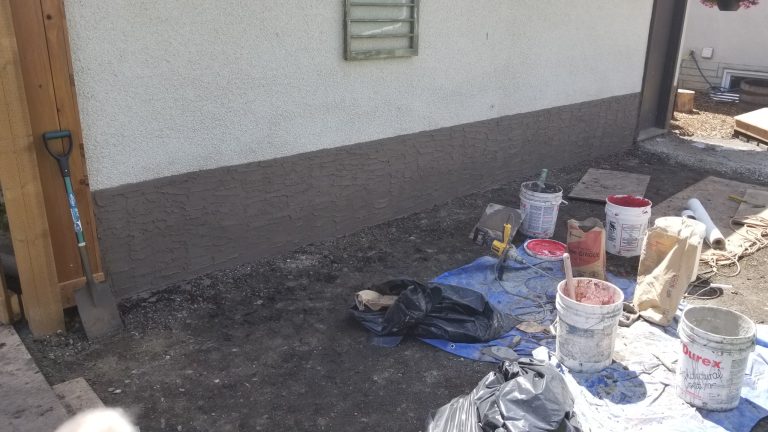
Parging is a thin coating of material which is particularly useful for the foundation and basement walls. It’s an efficient way to cover and strengthen an otherwise fragile surface. Contrary to common belief, concrete walls require protection with the proper parging mix. Parge coat protects the cement and concrete against various external factors and hazards. If needed, flashings and membrane tapes will be applied for additional water control. Then, depending on the clients’ wishes and needs, we will install a textured layer, smooth or acrylic coat. Finished look will not only transform the aesthetics of the building and the foundation, but will also provide an excellent protection and moisture control for many years.
Over the last few years, many foundations on residential homes and commercial buildings have a new system called ICF (Insulated Concrete Forms). This system insulates the concrete with foam and by default, foams are not resistant to dirt, ice, water and wind long term. We offer our ICF parging services and provide various textures and designs.


Parging Repair
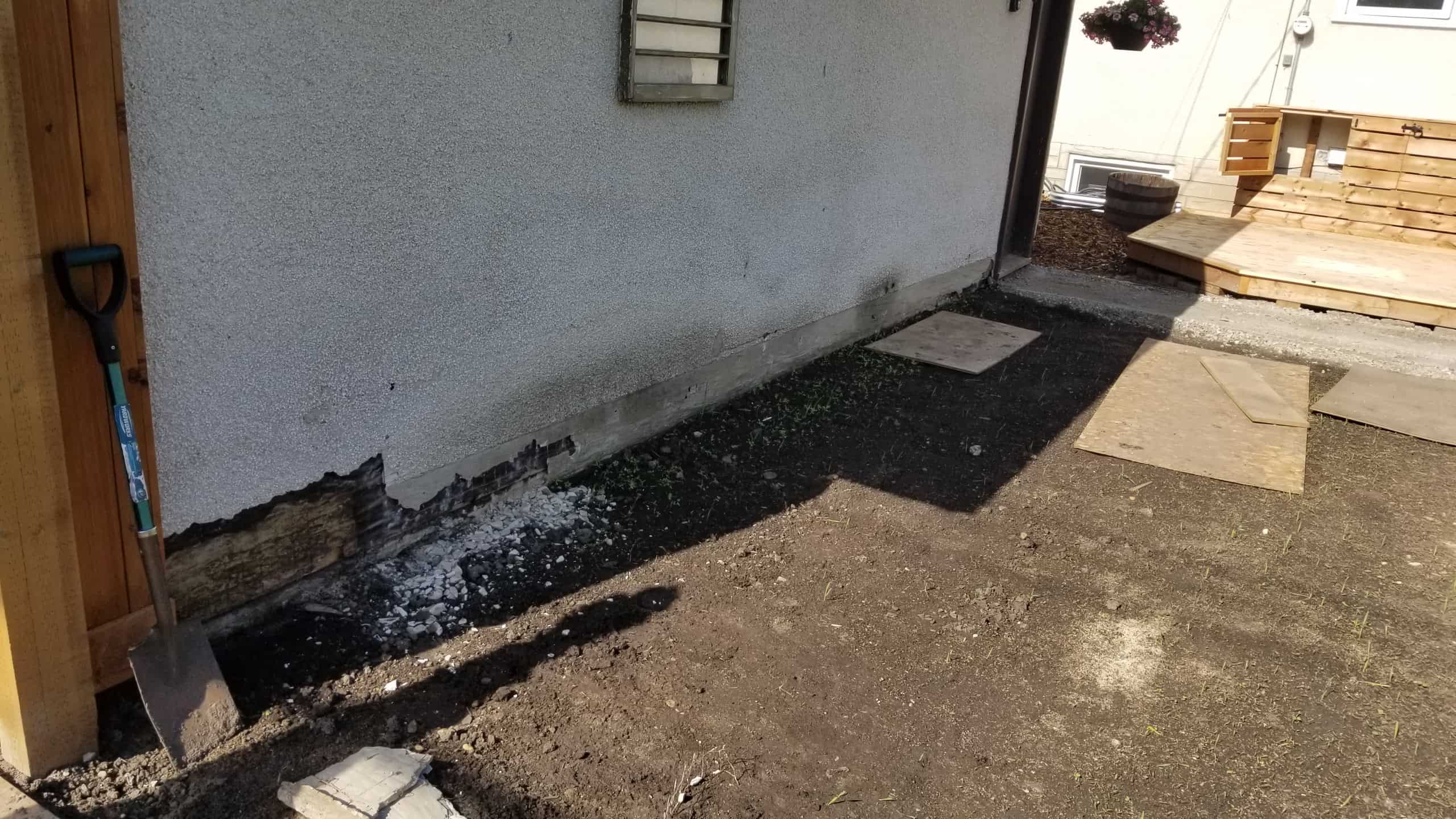
If you have noticed that your parging coat is falling apart, chipping away or crumbling, it’s a good idea to start considering a parging repair service. When the water gets in and freezes due to seasonal conditions, it slowly hurts the parging mix and cause it to fall apart further. If the condition is severe and large sections are chipping off, a parging removal and renewal is recommended.
Parging installation and repair services are quite affordable compared to some other coating and wall systems. Solida Coatings provides free estimates and can start the work right away on the given scheduled date. -weather permitting- Contact us for your free estimate today.
What Are Parging Services and Why Choose Them in Sherwood Park?
Parging services apply a cementitious or polymer-modified coating to foundation concrete or masonry to seal hairline pores, protect against surface erosion, and improve curb appeal. Parging works by creating a cohesive barrier—consisting of a base or scratch coat and a finish coat—that reduces water penetration and shields mortar joints from mechanical wear, which is particularly important where freeze-thaw cycles stress masonry. Choosing parging in Sherwood Park addresses local risks like heavy spring snowmelt and seasonal frost heave, providing a cost-effective layer of foundation protection when combined with proper drainage. Understanding finish types helps homeowners decide whether smooth parging, textured stucco, or acrylic overlays best match durability needs and aesthetic preferences. The following table compares common finish types and their typical uses for Sherwood Park conditions, making it easier to pick the right approach for protection and appearance.
Different parging and stucco finish types vary in durability, intended use, and cost, so this table highlights the practical trade-offs for local homeowners.
Finish Type | Durability / Typical Use | Cost Range / Short Descriptor |
Smooth cement parging | Durable barrier for basic moisture protection and minor crack coverage | Moderate — practical for straightforward foundation repairs |
Textured/stucco parging | Aesthetic versatility with improved crack masking and abrasion resistance | Moderate to higher — chosen for curb appeal and concealment |
Acrylic or polymer-modified finish | Flexible, weather-resistant finish that handles freeze-thaw cycles better | Higher — for long-lasting protection and reduced maintenance |
Cementitious overlay (repair patch) | Localized overlay to address spalling and displaced mortar | Low to moderate — used for targeted remediation and patching |
This comparison clarifies why homeowners select specific finishes: smooth parging for simple protection, textured stucco for appearance and masking, and polymer-modified finishes when enhanced flexibility and freeze-thaw resilience matter. The next section explains precisely how foundation parging protects a Sherwood Park home at the micro level and when it is a surface treatment versus when structural work is required.
How Does Foundation Parging Protect Your Sherwood Park Home?
Foundation parging protects by sealing microscopic pores and bridging hairline cracks, which reduces capillary water rise and lateral moisture migration toward the interior. The parging base coat and bonding agent adhere to concrete or block, while the finish coat repels direct splash and abrasion, thereby reducing the rate of mortar degradation and preventing freeze-thaw cycling from undermining mortar joints. This protective layering lowers the chance of spalling and diversion of water away from the foundation face, complementing exterior drainage and weeping tile systems. While parging addresses surface issues and minor deterioration, it is not a substitute for structural underpinning or major crack repair; significant displacement or deep cracks require foundation repair specialists and different remediation methods. Understanding these limits helps homeowners pair parging with drainage improvements for long-term protection and reduced maintenance needs.
Foundation Moisture Prevention: The Efficacy of Parging and Grading Foundation-related moisture issues can be substantially reduced through the implementation of proactive preventative strategies. Maintaining appropriate grading that directs surface water away from the foundation is paramount to averting water accumulation. For exposed, damp foundation walls, the application of a cementitious coating, known as parging, can serve as a critical barrier, effectively repelling subterranean moisture from the building envelope and thereby mitigating moisture-induced deterioration. Moisture in Historic Buildings and Preservation Guidance, 2009
What Types of Stucco and Parging Finishes Are Available Locally?
Local contractors commonly offer several parging and stucco finish types suited to Sherwood Park climate challenges, including smooth cement parging, textured stucco, acrylic-modified finishes, and cementitious patch overlays. Smooth cement parging provides a clean protective layer that is straightforward to apply and repair, while textured stucco offers aesthetic variety and better hides imperfections, making it popular for visible foundation walls and above-grade masonry. Acrylic or polymer-modified finishes introduce flexibility that reduces cracking in freeze-thaw conditions and can be paired with bonding agents to enhance adhesion on older masonry. Choosing between these options depends on desired longevity, maintenance tolerance, and whether energy upgrades or EIFS systems are being considered as part of a broader exterior renovation package.
How to Find Reliable Parging Contractors in Sherwood Park?
Finding a reliable parging contractor starts with targeted research, clear vetting criteria, and comparing itemized estimates to ensure transparency and quality. Prioritize contractors who demonstrate experience with foundation parging in Alberta climates, provide clear written estimates, and can explain how they address freeze-thaw issues, drainage, and substrate preparation. Use a structured checklist when contacting firms to ensure consistent evaluation and to surface red flags such as vague scope descriptions, lack of portfolio photos of similar work, or reluctance to provide references. The next subsections explain the key credentials to request and where to read and interpret local reviews so you can compare prospective providers effectively.
Below is a checklist homeowners can use to vet parging contractors during initial outreach and estimate comparison.
- Verify insurance and liability coverage: Confirm the contractor carries appropriate liability insurance and can explain coverage in writing.
- Request a detailed, itemized written estimate: Ensure labor, materials, prep work, and disposal are listed separately.
- Ask for local references and project photos: Obtain examples of similar climatic conditions and finish types.
- Confirm warranty and remediation policies: Understand what is covered and for how long after completion.
Use this checklist during calls and meetings to maintain consistent comparisons, and insist on written documentation before work begins to avoid scope creep and ambiguity.
What Is the Typical Cost of Parging Repair in Sherwood Park and Alberta?
Typical parging repair costs in Sherwood Park and Alberta vary by project scale, but homeowners can expect a range driven by square footage, substrate preparation, finish choice, and any underlying remediation. Most jobs fall into categories: minor patch repairs for small spalls and hairline cracks, partial re-parging for localized areas, and full re-parging or finish upgrades across exposed foundation walls. Key cost drivers include the extent of prep and repair, material selection (cementitious vs polymer-modified), labor and local crew rates, access and scaffolding requirements, and disposal or remediation of contaminated materials. The following table breaks down common cost drivers and typical value ranges to help homeowners budget and ask informed questions during estimates.
Below is a practical cost driver table showing typical value ranges and what each element commonly includes.
Cost Driver | What It Includes | Typical Value / Range |
Surface preparation | Cleaning, chipping loose material, bonding agent application | Moderate cost; essential for adhesion |
Repair/remediation | Repointing mortar, patching spalls, addressing efflorescence | Variable; higher if structural repairs needed |
Materials & finish | Cement parge, textured stucco, polymer additives | Low to high depending on finish choice |
Labor & access | Skilled labor, scaffolding, site protection | Significant portion of total cost |
Disposal & cleanup | Waste removal and site restoration | Minor to moderate depending on volume |
This breakdown helps homeowners see which items drive price and what should appear on an itemized quote. The next subsection details specific factors that push prices up or down and offers scenarios to illustrate relative cost differences.
Which Factors Influence Parging Repair Prices in Sherwood Park?
Several variables influence final parging prices: the amount of preparation and substrate repair required, the chosen finish and materials, site access and scaffolding needs, and the degree of site remediation or disposal. Minor patch jobs that require limited prep and a small cementitious overlay are substantially less expensive than full wall re-parging that requires scaffolding and removal of loose block or deteriorated mortar. Finish complexity—smooth versus textured or acrylic—also affects material and labor time, while environmental remediation (mold, efflorescence) increases costs because it demands additional treatment and drying time. Recognizing these factors helps you evaluate whether a low initial estimate is realistic or whether hidden prep work will inflate the final bill.
How to Get Accurate Quotes for Foundation Parging and Repairs?
To obtain accurate quotes, prepare clear documentation including photos of affected areas, notes about interior dampness or historical water intrusion, and a brief history of previous repairs; these items let contractors anticipate hidden work. Request itemized written estimates that separate prep, materials, labor, access equipment, disposal, and warranties, and ask for timelines and staging details to compare apples to apples between bids. When contractors visit, point out drainage problems, grading issues, and nearby landscaping that could affect access and cost, and ask for references for similar local work. Comparing at least three detailed quotes and checking how each addresses underlying moisture management will yield the most reliable basis for selection.
When Is Foundation Parging Repair Necessary in Sherwood Park?
Foundation parging repair becomes necessary when surface deterioration allows moisture to penetrate the foundation face, when parging delaminates, or when visible spalling and large cracks appear that risk interior water issues. Parging that is peeling, powdering, or exposing masonry indicates failed adhesion and requires repair to prevent accelerated degradation from freeze-thaw cycles common in Alberta. Timely parging repair can stop minor surface problems from evolving into structural issues, but when cracks show horizontal displacement or settlement signs, a structural assessment is required before any parging overlay is applied. The following list presents clear, observable warning signs homeowners should watch for, enabling fast action that preserves foundation integrity.
Homeowners can look for these key warning signs that indicate parging repair is needed.
- Peeling or delaminating parging: Visible separation between the parge coat and masonry indicates adhesion failure.
- Large cracks or spalling: Deep cracks or flaked concrete exposing aggregate signal material loss and potential structural risk.
- Persistent exterior or interior moisture: Ongoing wetness, efflorescence, or basement dampness suggests parging is no longer preventing water ingress.
- Displacement or bulging areas: Any movement or bulging of the foundation face requires immediate professional assessment.
These indicators help prioritize urgency: peeling and small cracks are often repairable promptly, while displacement or persistent interior dampness should trigger an immediate professional inspection and potential structural remediation.
Mitigation of Basement Water Infiltration Through Foundation Coatings To preclude basement water intrusion originating from surface water and groundwater, several strategies can be implemented. These encompass ensuring adequate grading around the foundation to facilitate water diversion away from the structure, installing effective drainage systems, and applying a waterproofing membrane or cementitious parging to the foundation walls. The existence of fissures or degradation in the foundation wall, or in the cementitious parging, may also indicate that water intrusion has occurred or is probable. Water Infiltration into Basements, 2021
What Are Common Signs of Foundation Damage Requiring Parging?
Common signs that foundation damage needs parging or further intervention include surface cracking that widens over time, exposed masonry or mortar loss at the base of walls, water stains and efflorescence, and interior basement dampness correlated with exterior problems. Minor hairline cracks and superficial scaling may be addressed with patching and a new parge coat, whereas progressive cracking patterns—such as horizontal cracks or stepped cracks in block walls—can indicate movement and need specialist structural evaluation. Observing these patterns early allows parging to be part of a combined solution with drainage fixes, but delaying assessment increases the chance of deeper remediation and higher costs. Recognizing severity levels helps homeowners decide whether to schedule routine maintenance, a targeted repair, or a full structural assessment.
How Does Stucco Parging Help Prevent Structural Issues?
Stucco parging contributes to structural prevention by diverting surface water, shielding mortar joints from repeated wetting and freezing, and providing an abrasion-resistant exterior layer that slows material loss. When combined with proper grading, functioning gutters, and effective perimeter drainage, stucco parging integrates into a defensive system that reduces lateral water pressure and freeze-thaw-induced spalling. However, parging is only one component of foundation health; it complements waterproofing membranes, weeping tile systems, or underpinning work as needed rather than replacing them. Regular upkeep and attention to drainage are essential to preserve the protective function of parging and avoid masking deeper issues that require structural solutions.
Deterioration of Historic Masonry: Parging for Freeze-Thaw Resistance In Great Britain, parging (or pargeting) refers to the application of a decorative or protective render to masonry, often to enhance its aesthetic appeal or to shield it from environmental factors. This technique is particularly pertinent in regions subjected to severe climatic conditions, such as those experiencing freeze-thaw cycles, where the render can mitigate water infiltration and subsequent damage to the underlying masonry substrate. A glossary of historic masonry deterioration problems and preservation treatments, 1984
How to Maintain and Extend the Life of Parging in Sherwood Park?
Routine maintenance tailored to Alberta’s seasonal cycle preserves parging performance and prevents small issues from becoming costly repairs, and a scheduled approach protects your investment. Spring inspections are crucial after winter thaw to identify hairline cracks and areas where de-icing salts or freeze-thaw cycles have stressed the finish, while summer is the time for gentle cleaning and minor resealing when temperatures are stable. Fall maintenance should focus on ensuring gutters and grading direct water away from the foundation, and winter preparation includes avoiding harsh chemical de-icers near parged surfaces and addressing ice dams on roofs that can increase foundation moisture. The table below outlines key maintenance tasks, recommended frequency, and seasonal notes to help homeowners implement a manageable upkeep plan.
This maintenance schedule lists tasks, their recommended frequency, and notes on seasonal considerations for Sherwood Park homeowners.
Maintenance Task | Frequency | Seasonal Notes / Estimated Effort |
Visual inspection of parging | Annually, after spring thaw | Check for hairline cracks, delamination; 1–2 hours |
Clean and remove debris | Annually, late spring | Gentle wash to remove salts and dirt; avoid pressure washing |
Minor patching and reseal | Every 2–4 years as needed | Address hairline cracks before freeze cycles; minor cost |
Check grading and gutters | Twice yearly (spring/fall) | Ensure water moves away from foundation; moderate effort |
Following this schedule helps catch small issues early and reduces the likelihood of expensive repairs, and the next subsection explains best practices and do’s and don’ts for parging maintenance in Alberta’s climate.
What Are Best Practices for Parging Maintenance in Alberta’s Climate?
Best practices for parging maintenance in Alberta prioritize water management, gentle cleaning, and prompt minor repairs to limit freeze-thaw damage and chemical exposure. Maintain positive grading away from the foundation, keep gutters and downspouts clear and functioning, and avoid using abrasive de-icers adjacent to parged surfaces because salts can accelerate surface deterioration. Inspect parging after prolonged cold snaps or heavy melt events and address hairline cracks with compatible cementitious patch materials to prevent moisture ingress before winter. Gentle cleaning with mild detergents and low-pressure rinsing removes salts and organic buildup without damaging coatings, preserving adhesion and finish life.
When Should You Schedule Professional Parging Inspections?
Schedule professional parging inspections every 2–3 years for preventative assessment, and arrange event-driven inspections after severe freeze-thaw cycles, significant water incidents, or visible changes in finish condition. Professional inspectors evaluate adhesion, check for hidden moisture issues, assess whether underlying structural problems exist, and recommend whether minor patching, partial re-parging, or more extensive remediation is appropriate. If DIY checks reveal large cracks, failed adhesion, or interior dampness, bring in a pro promptly to avoid escalation; their report should outline scope, recommended materials, and timelines. Regular professional reviews combined with homeowner seasonal maintenance yield the best long-term outcomes and protect against unexpected failures.
What Are the Benefits of Stucco Parging Compared to Other Exterior Finishes?
Stucco parging offers a blend of durability, aesthetic flexibility, and low-maintenance protection that compares favorably against options like vinyl siding, brick veneer, and painted masonry in many Sherwood Park applications. Parging provides a continuous cementitious or polymer-modified surface that resists abrasion and can conceal minor substrate irregularities, while textured finishes allow for design variety without sacrificing protective function. Compared to vinyl, parging avoids issues with wind uplift and provides a harder protective layer, and compared to painted masonry it can reduce repaint cycles by masking surface loss. When combined with insulation or EIFS systems, parging can be part of an energy-effective wall assembly, though parging alone offers limited thermal benefit unless integrated into a broader insulated strategy.
Homeowners should weigh these benefits against other finishes using a concise pros/cons list before deciding.
- Durability: Parging resists abrasion and conceals minor masonry defects compared to painted surfaces.
- Aesthetic versatility: Textures and finishes provide multiple design options without sacrificing protection.
- Maintenance profile: Properly applied parging requires less frequent cosmetic upkeep than painted masonry.
- Complementary to energy upgrades: Works well when combined with insulation or EIFS for thermal gains.
These comparisons show parging’s strengths for foundation protection and appearance, and the final subsections detail how parging improves aesthetics and when it yields energy advantages.
How Does Stucco Parging Improve Home Aesthetics and Durability?
Stucco parging refreshes curb appeal by covering stained or patched masonry and offering texture and color choices that complement exterior design, while its cementitious nature adds abrasion resistance that slows surface loss. A new parge or textured stucco finish evens surface irregularities and can be tinted or painted to match architectural styles, delivering both visual and protective upgrades. Durability gains stem from reduced direct exposure of mortar joints to wetting cycles and physical wear, which extends the service life of underlying masonry when paired with correct drainage. Homeowners replacing tired or weathered foundations often find that a well-executed parging project both revitalizes appearance and reduces the frequency of future surface repairs.
Are There Energy Efficiency Advantages with Stucco Parging?
Parging by itself provides limited insulation value, but when combined with an insulated wall assembly or EIFS, it contributes to improved thermal performance and mitigates heat loss through the foundation wall. Integrated systems that layer insulation, drainage planes, and a parged finish create a continuous thermal and weather barrier that can reduce energy demand and improve comfort. For many Sherwood Park homes, the decision to pursue energy upgrades alongside parging depends on cost-benefit considerations and the condition of existing walls; pairing parging with additional insulation or insulated finishes is the route to measurable efficiency gains. Evaluating these options with contractors ensures the chosen system balances thermal performance, moisture management, and long-term durability.
OUR SUPPLIERS
Every project is unique and requires a different approach. Working with variety of suppliers and manufacturers ensure that we deliver the best results.





Quick Answers to Frequently Asked Questions.
Parging is a coating that consists of Portland-cement, sand and water. This parge coating is applied on the visible portion of your home’s foundation walls. It provides aesthetic appeal while offering a protective layer for your foundation.
Parging protects your home or building’s foundation against elements such as weather. In time, weather elements slowly deteriorates the foundation walls and cause them to crumble and fall apart. Parging acts as a protective layer and deflects the hazardous elements.
Parging not only provides an aesthetic appeal to your home, but it also provides protection for your foundation walls against weather conditions whether it is concrete, wood or masonry based walls.
Parging offers insulation though minimal against weather conditions. It also prevents insects and other animals from nesting inside.
Contrary to common belief poured concrete walls are weak against weather elements such as snow, rain and wind. Parging offers an additional layer of protection against these hazardous elements and is needed for any type of foundation walls whether they are wooden, poured concrete or ICF walls.
Parging is not considered a DIY project, however with the right tools, material and experience it can be done. If you feel comfortable using trowels and mixture of sand based cement, you can apply the parge coat and the texture.
Generally speaking however, parging cannot be done by majority of people due to lack of experience. What is recommended is that you can fix the small cracks and apply little patches by yourself by purchasing pre-made parge mix at a store.
There are few number of reasons why a parging falls off. A poor workmanship while applying the parge coat is one of the reasons. Parging should be pressed onto the foundation walls with a trowel and it requires a certain amount of thickness for it to be strong. Additionally, poorly prepared parging mix can be another reason why a parging falls off. A good ratio between sand, cement and water is a necessity when preparing the parge mix.
Moreover, if the weather conditions are bad when applying the parging coat, it is doomed to fail later. A certain degree of good weather conditions is needed when applying parging. Therefore, inexperience and poor workmanship are the leading causes of why a parging fails and falls off.
Parging itself is not a waterproofing system that keeps the water out, however it offers immense benefits for water control. It is especially useful for membrane and other waterproofing systems that lies underneath the parge coat. Just like stucco, parging does not keep the water out however controls it.
Considering Canada’s weather conditions, parging season is between April and November where the temperatures allow the parge coat to dry nicely and timely. At least 48 hours should be given for parging to cure and stick to the foundation walls.
There are few alternatives to parging. Though more costly, these alternatives can beautify the foundation walls while offering various benefits.
- EIFS
Acrylic stucco system -commonly known as EIFS- can be applied on the foundation walls. This system offers the benefits of choosing over 100 different colors and better insulation. It provides water control, insulation and better appeal to foundation walls.
- Masonry
Masonry systems such as; brick, cultured stone or block walls can be installed instead of parging. However, these systems are more costly.
Most people use portland-cement and sand for parging. However, it is crucial to apply concrete adhesive bonding prior to applying parge coat onto the foundation walls so that the parging sticks better on to the surface.
Additionally, a good practice is to apply fiberglass mesh embedded in parge coat so that it provides the much needed flexibility against weather conditions.
As a good rule of thumb, the parge coat should be applied in a thick coating, ideally as 10mm (3/8 inch) however the thickness can vary due to the conditions of the wall and requirements.
Then the texture or a second coating can be applied for beautification and aesthetic appeal purposes while offering additional protection against weather elements.
Depending on the thickness of the parge coat, it is a good practice to allow it to harden in 24 to 48 hours. Parging will take at least 2 days to cure and settle.
You can paint the parging with the proper masonry-based or exterior stucco paint however, it’s not a good idea.
Parging protects the foundation walls which are on the lower part of a building or a home and foundation walls embrace the dirt, snow, ice and rain. Over time, the paint will chip away while chemicals inside eating away into the parging, leaving it vulnerable against weather conditions.
Concrete foundation itself will expand and shrink due to temperature and foundation settlements happen regularly therefore small hairline cracks in your parging is nothing to worry about.
Absolutely. The parging can be washed after it settles and cures. You can wash your parging to clean it from dirt.
No, it is not. Smooth parging is the texture that is different than skip-trowel texture and is needed to be floated. The acrylic parging uses acrylic finish coat as the textured layer. Although both systems require floating, the look and interior layers are different.