
Cost Effective and High Quality
SPRUCE GROVE
PARGING SERVICES
Residential - Commercial
GET A FREE ESTIMATE
TRADITIONAL COLORS
ACRYLIC COLORS

Professional Parging Contractor in Spruce Grove
Solida Coatings has been helping homeowners, builders, contractors, developers and property managers throughout Spruce Grove and surrounding areas for over 14 years with various parging projects. It is our mission to provide best results for your building’s exterior cladding system.
Solida Coatings is a parging contractor offering coating and cladding services for both residential and commercial properties. Solida Coatings takes on any size and kind of project with ease, using only use top quality materials from reputable suppliers which helps provide better results for your project. Solida Coatings offers free estimates for parging and parging repair projects in greater Spruce Grove and surrounding areas.
Parging Installation
Foundation walls without proper parging, also known as basement walls on houses, office buildings, apartment complexes and various premises are susceptible to various hazards. Furthermore, considering Spruce Grove’s weather, the walls start to crumble and get cracks in time. These cracks can seem unimportant at first, over time they cause major problems such as water leakage into the basement. Damages on parging and concrete should be taken seriously and require immediate repair.
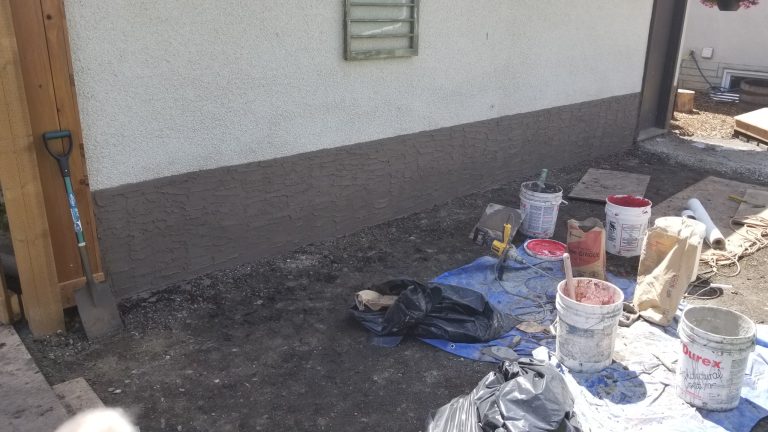
Parging is a thin coating of material which is particularly useful for the foundation and basement walls. It’s an efficient way to cover and strengthen an otherwise fragile surface. Contrary to common belief, concrete walls require protection with the proper parging mix. Parge coat protects the cement and concrete against various external factors and hazards. If needed, flashings and membrane tapes will be applied for additional water control. Then, depending on the clients’ wishes and needs, we will install a textured layer, smooth or acrylic coat. Finished look will not only transform the aesthetics of the building and the foundation, but will also provide an excellent protection and moisture control for many years.
Over the last few years, many foundations on residential homes and commercial buildings have a new system called ICF (Insulated Concrete Forms). This system insulates the concrete with foam and by default, foams are not resistant to dirt, ice, water and wind long term. We offer our ICF parging services and provide various textures and designs.


Parging Repair
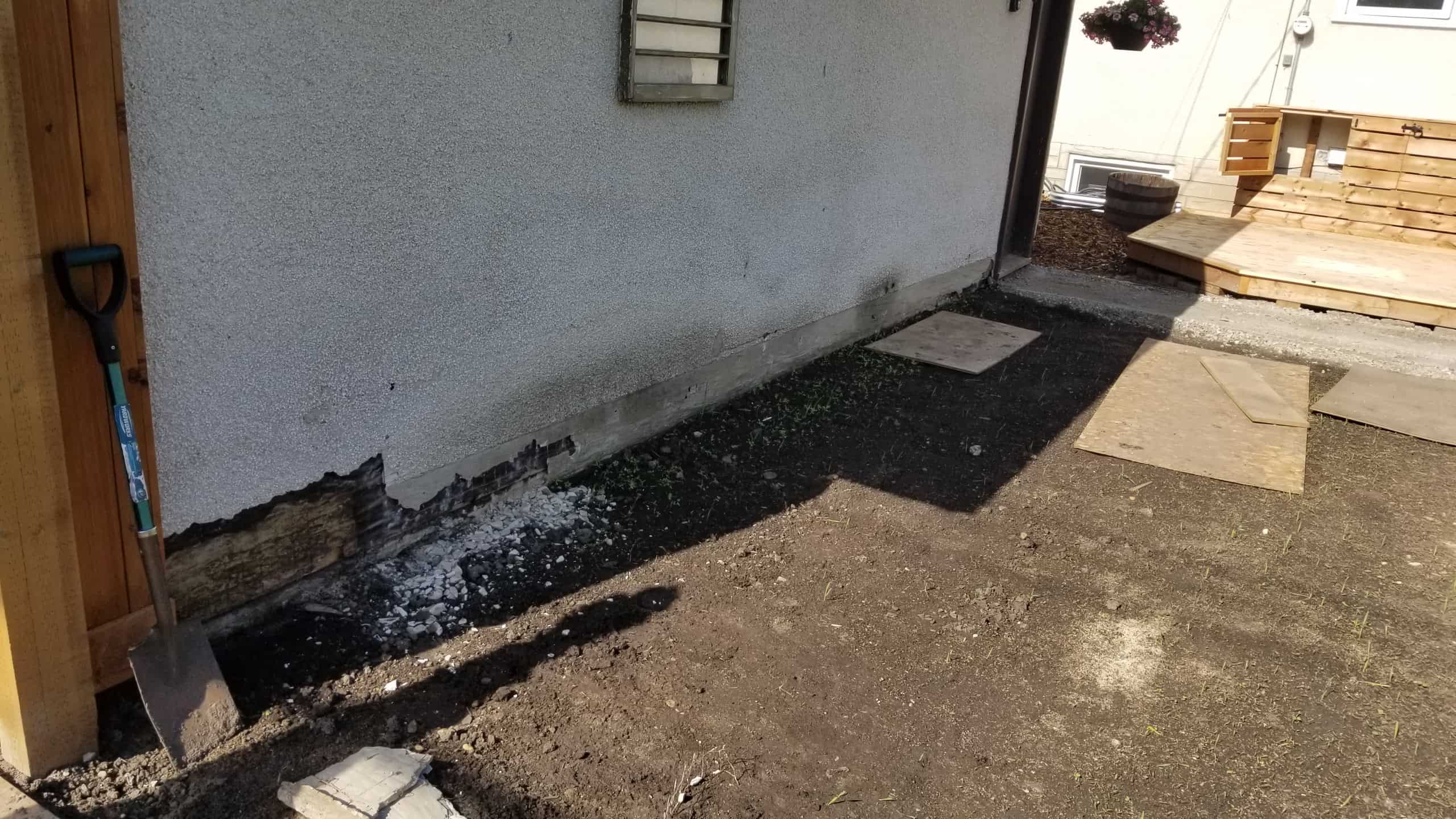
If you have noticed that your parging coat is falling apart, chipping away or crumbling, it’s a good idea to start considering a parging repair service. When the water gets in and freezes due to seasonal conditions, it slowly hurts the parging mix and cause it to fall apart further. If the condition is severe and large sections are chipping off, a parging removal and renewal is recommended.
Parging installation and repair services are quite affordable compared to some other coating and wall systems. Solida Coatings provides free estimates and can start the work right away on the given scheduled date. -weather permitting- Contact us for your free estimate today.
What Is Parging and Why Is It Essential for Spruce Grove Homes?
Parging is a cementitious or polymer-modified coating applied to masonry and concrete foundation walls to create a continuous surface that resists moisture penetration and mechanical wear. The mechanism is simple: a properly bonded parge coat seals minor porosity and provides an outer layer that sheds water and reduces direct freeze-thaw stress on the substrate. The result is improved foundation longevity and a neater appearance that resists efflorescence and spalling when maintained. For Spruce Grove properties, where frequent freeze-thaw cycles and de-icing salts are common, parging functions as both a protective layer and a sacrificial finish that is easier and less costly to repair than bare concrete.
Historically, parging has been understood as a form of plastering or stucco ornamentation, applied to exterior walls for both protection and aesthetic enhancement.
Traditional Stucco and Parging: Components and Application This discussion addresses the nature and constituent elements of traditional stucco, alongside the application methodologies for both stucco and parging. Pargeting, a historical form of stucco ornamentation, is a decorative technique applied to exterior building walls, typically as a thin layer of plaster or cement.
Understanding parging’s materials and protective mechanisms leads directly into a closer look at common mixes and why some formulations perform better in Alberta’s climate.
What Materials Are Used in Parging for Spruce Grove Foundations?
Common parging mixes combine cement, sand, and lime with additives such as bonding agents and sometimes reinforcing mesh to improve adhesion and crack resistance. Cementitious mixes are economical and durable for basic foundation protection, while acrylic and polymer-modified formulations add flexibility and improved adhesion in cold climates. Bonding agents and concrete bonding agents create an interface that reduces delamination risk, and reinforcing mesh is used where additional mechanical strength is required. Choosing polymer-modified or acrylic mixes is often recommended in Spruce Grove to improve freeze-thaw tolerance and reduce hairline cracking in exterior applications.
These material choices set the stage for how parging protects foundations in practice and why surface preparation matters for long-term performance.
How Does Parging Protect Foundations from Alberta’s Harsh Weather?
Parging reduces water ingress by creating a consolidated surface that sheds rainfall and surface runoff, and this moisture control reduces the volume of water available to freeze within the concrete. When moisture movement is limited, freeze-thaw deterioration and salt-related scaling slow significantly, preserving the structural surface. Proper bonding and correct curing further reduce vapor migration and detachment, which are common failure modes in cold climates. In situations with persistent hydrostatic pressure or chronic water entry, parging works best alongside foundation waterproofing systems rather than as a standalone cure.
With materials and protection mechanisms clarified, homeowners can assess when a parge coat alone suffices and when complementary waterproofing or concrete repair is needed.
How Do Professional Parging Contractors in Spruce Grove Deliver Quality Services?
Professional parging contractors deliver quality by combining thorough inspection, meticulous surface preparation, correct mixing and application, and consistent finishing and curing practices that mitigate local climate stresses. Inspection identifies substrate issues—cracks, delamination, efflorescence—that must be addressed before any parge coat is applied, ensuring the remedy treats causes not just symptoms. Surface preparation, including cleaning, removal of loose material, and the use of bonding agents, creates the necessary adhesion for long-term performance. Contractors also select material formulations suited to Alberta conditions and perform finishing, color matching, and textured finishes to meet aesthetic goals while protecting the foundation.
The application of parging, particularly in historical contexts, involved a hands-on approach similar to plastering, often finished by hand without specialized tools for specific areas like chimney flues.
The Historical Practice of Parging in Plastering and Chimney Construction Parging was then synonymous with plastering, and I am inclined to believe the term remains in use in certain regions. We still parge a chimney flue, a process where neither a rule nor a float is employed; instead, the plaster is applied with a trowel and finished by hand.
This overview leads directly into the typical installation steps professionals follow to ensure reliable outcomes and predictable timelines.
What Are the Steps in the Parging Installation Process?
Professional installation typically follows a consistent workflow: inspection and scope, surface preparation and repair, mixing and application, finishing and texture, and final curing and inspection. Inspecting the foundation identifies structural versus cosmetic concerns, which informs whether crack repair or structural remediation is required before parging. Surface preparation involves cleaning, patching spalls, applying bonding agents, and installing reinforcing mesh where needed to stabilize the substrate. Application uses correct mix ratios and layering techniques, followed by texturing and color matching if desired; curing times and post-application checks complete the job.
This stepwise process creates a predictable quality control path, and when problems appear later the repair workflow clarifies whether spot patching or full re-parging is required.
How Is Parging Repair and Restoration Performed on Cracked or Damaged Foundations?
Repair begins with diagnosis: distinguishing hairline surface cracks from structural movement or water-driven failure determines the method. Common remediation includes removing loose material, cleaning salts and efflorescence, applying concrete bonding agents, and using patch mortars or polymerized repair compounds for cracks and spalls. For widespread delamination or poorly bonded existing parge coats, contractors remove the failed coating and re-apply a properly prepared parge system, sometimes combining additional waterproofing or crack injection for structural stabilization. Deciding between a patch repair and a full restoration depends on the extent of damage and the underlying cause, so accurate assessment avoids repeated work.
Having covered contractor workflows and repair approaches, homeowners should know how costs are typically determined and what to expect when requesting estimates.
What Are the Typical Costs and Factors Affecting Parging Services in Spruce Grove?
Typical parging costs vary based on measurable drivers such as surface area, access, extent of repair, and material choice; a ballpark range for basic parging work often reflects price per square metre adjusted for repair complexity and finish. Contractors calculate estimates by measuring square footage, evaluating prep needs (removal of failed parge, crack repair, efflorescence cleaning), choosing a mix (cementitious vs polymer-modified), and accounting for finishing requirements like texture and color matching. Labour access and weather windows also affect price because difficult access or extended curing times increase time and cost. Understanding these factors helps homeowners interpret line items on a quote and compare bids on an equal basis.
Which Factors Influence the Cost of Foundation Parging in Spruce Grove?
Several specific factors influence costs: the square footage of the area, the condition of the existing surface, the chosen material system, finish complexity, and site access or scaffolding needs. Larger areas provide economy of scale and typically lower per-m² rates, while extensive repair work or substrate remediation increases labour and material costs. Polymer-modified products and specialized textured finishes raise material expenses but deliver improved longevity in Alberta’s freeze-thaw conditions. Difficult access, grading work, or required scaffolding increases labour time and safety measures, which also adds to the final price.
Understanding these drivers helps homeowners prioritize fixes and ask contractors targeted questions about line items and alternatives.
How Can Homeowners Get Accurate Parging Repair and Installation Estimates?
To get accurate estimates, request on-site assessments from multiple reputable providers, ask for written scopes that list materials, surface preparation tasks, warranty terms, and expected timelines, and compare apples-to-apples details. Key questions include which mix will be used (cementitious, acrylic, or polymer-modified), whether bonding agents and mesh are included, who is responsible for cleanup and site protection, and what warranty or guarantee is offered for materials and workmanship. Red flags include vague scopes, verbal-only promises, and price quotes that are dramatically lower without detailed explanation. Collecting written quotes with specified exclusions reduces surprises and supports informed decisions.
The next section compares stucco parging and traditional parging so homeowners can decide which finish fits project goals and local performance needs.
How Does Stucco Parging Compare to Traditional Parging in Spruce Grove?
Stucco parging and traditional parging share the goal of covering and protecting masonry, but they differ in system composition, aesthetics, and maintenance needs, which affects suitability for Spruce Grove homes. Stucco is typically a multi-layer decorative and protective system with design flexibility—layers include a base coat, reinforcement, and finish coat—while traditional parging is a single or double coat focused primarily on sealing and minor cosmetic improvement. Stucco offers broader texture and color options and can better handle architectural expectations for visible walls, whereas polymer-modified parging is optimized for direct foundation protection against freeze-thaw. Choosing between them depends on whether appearance or maximum moisture resistance is the priority.
The table below compares key attributes to guide selection for local conditions.
Comparing stucco and traditional parging highlights composition, durability, and best uses.
System | Composition | Durability in Alberta | Typical Use |
Traditional parging | Cement, sand, lime; optional polymer modifiers | Good when polymer-modified; resists moisture with proper prep | Foundation protection, below-grade walls |
Stucco parging | Layered base coat + mesh + finish coat (may be acrylic) | Very good when installed correctly; decorative finishes susceptible to cracking if substrate moves | Visible exterior finishes, aesthetic renovations |
Polymer-modified parge | Cementitious mix + polymer additive | Best for freeze-thaw resistance and adhesion | Foundations needing enhanced durability |
The application of stucco, especially in historical contexts, often involved decorative ornamentation and was applied as a finishing layer to exterior walls, highlighting its dual role in protection and aesthetics.
Parging: A Historical Examination of Stucco Ornamentation and Exterior Wall Finishing The parge work found in England exemplifies modeled stucco ornamentation applicable to residential exteriors. This technique involves finishing exterior walls with a layer of plaster or cement, applied in a plastic or malleable state, and subsequently finished to ensure its suitability for its intended purpose.
What Are the Key Differences Between Stucco and Parging?
Key differences include system complexity (multi-layer stucco vs single-coat parge), finish options (stucco supports many textures and colors), and performance characteristics (polymer-modified parging offers superior bond and flexibility for freeze-thaw cycles). Stucco requires more meticulous substrate preparation and has higher aesthetic expectations, whereas traditional parging focuses on sealing and minor surface correction. Maintenance patterns differ: stucco finishes may need repainting or thincoat repairs for cosmetic reasons, while parging repairs are typically localized patching for protection. Knowing these differences helps homeowners prioritize either curb appeal or foundational longevity.
These contrasts inform the decision of when to choose one approach over the other for a specific property or project objective.
When Should You Choose Stucco Parging Over Standard Parging?
Choose stucco parging when the foundation or visible wall is intended as a finished exterior surface and aesthetic flexibility is important, such as in visible walkout basements or renovation projects that require design continuity. Stucco is appropriate for projects emphasizing textured finishes, color matching with exterior cladding, or heritage restoration where appearance matters. For purely below-grade foundation protection where freeze-thaw resilience and minimal maintenance are the priority, polymer-modified parging is usually the better option. Consider long-term maintenance commitments and local climate exposure when making the selection.
After deciding on system type, homeowners should weigh benefits for residential and commercial properties in Spruce Grove to determine overall value.
What Are the Benefits of Parging for Residential and Commercial Properties in Spruce Grove?
Parging offers several tangible benefits for both residential and commercial properties: it improves curb appeal through smoother, textured, or colored finishes, provides an additional moisture barrier that reduces freeze-thaw damage, and can extend the service life of foundation walls when combined with proper maintenance. For commercial properties, parging delivers uniform aesthetics across large façades and helps protect investment assets against water ingress and surface deterioration. For residential properties, the visual improvement paired with reduced maintenance and longevity creates perceived value for buyers and reduces long-term repair costs.
The following table summarizes benefits by property type to clarify expected values for Spruce Grove owners.
Benefits differ by property type but consistently deliver protection and value.
Property Type | Benefit | Value Statement |
Residential | Curb appeal & color matching | Enhances resale perception and coordinates with exterior upgrades |
Residential | Moisture resistance | Reduces risk of freeze-thaw damage and efflorescence on foundations |
Commercial | Uniform aesthetics | Maintains consistent appearance across large façades and improves professionalism |
Commercial | Durability & reduced maintenance | Lowers lifecycle repair frequency and supports asset longevity |
How Does Parging Enhance Curb Appeal and Property Value?
Parging enhances curb appeal by offering smooth or textured finishes, color matching, and consistent surfaces that conceal patched or uneven masonry, creating a cleaner exterior aesthetic. Buyers often interpret a well-finished foundation as an indicator of overall maintenance, which can positively influence perceived property value. Coupling parging with landscaping, exterior painting, or trim updates multiplies curb appeal benefits and helps projects present as cohesive upgrades. For visible basement walls and walkout exteriors, the visual improvements are immediate and complement other renovations.
How Does Parging Improve Foundation Durability and Weather Resistance?
Parging acts as a sacrificial outer layer that limits moisture penetration and reduces direct exposure of the concrete to freeze-thaw cycles and de-icing salts, which slows surface scaling and spalling. When correctly bonded and cured, parging reduces vapor migration and protects against efflorescence, minimizing salt crystallization that degrades surfaces. Lifespan benefits depend on material choice—polymer-modified systems typically outlast basic cementitious mixes—and on ongoing maintenance such as prompt small repairs and proper site drainage. Combined with foundation waterproofing when needed, parging is an effective part of a holistic moisture-management strategy.
What Are Common Parging Problems in Spruce Grove and How Are They Solved?
Common failure modes include cracking, spalling, efflorescence, delamination, and poorly bonded existing parge coats; each problem has a diagnostic approach and corresponding remediation techniques. Cracking may indicate thermal movement, shrinkage, or substrate settlement; solving it requires cleaning, injecting or stitching structural cracks when necessary, and applying bonded patch systems or re-parging. Spalling and delamination are typically repaired by removing loose material, treating salt contamination, applying bond coats, and using polymer-modified patch mortars. Early identification and targeted repair reduce the need for full restoration and extend service life.
Below are practical lists identifying signs to watch for and common repair strategies to address them promptly.
Common problems and their primary repairs help homeowners prioritize professional assessment.
- Cracking: Visible hairline or structural cracks; repair with cleaning, injection, or re-parging where needed.
- Spalling: Flaking surface from freeze-thaw; remove loose material and use polymer patches.
- Delamination: Separation from substrate; remove failed coating and re-apply with bond coat.
- Efflorescence: White salt deposits; clean, treat source of moisture, then patch and seal.
How Do You Identify and Repair Cracked or Spalling Parging?
Identification starts with a visual inspection: hairline cracks, powdering, areas of flaking, and perpendicular gaps at joints are signs to evaluate further. Repair steps include removing loose or contaminated material, cleaning salts and debris, applying an appropriate bond coat, and using patch mortars or polymerized repairs to restore surface integrity. For larger or recurrent defects, contractors may remove and replace the parge layer and address contributing factors such as poor drainage, freeze-thaw cycling, or structural movement. Prompt repair prevents water ingress from worsening and reduces the likelihood of underlying concrete deterioration.
Correctly diagnosing cause versus symptom helps determine whether a patch, injection, or full restoration is necessary.
What Maintenance Tips Help Extend the Life of Parging in Alberta’s Climate?
Regular seasonal inspections—particularly after spring thaw—catch early signs of cracking, efflorescence, or edge deterioration and should be part of routine Spruce Grove home maintenance. Manage drainage and grading to keep runoff away from foundations, maintain gutters and downspouts, and trim vegetation that retains moisture against walls. Small repairs should be addressed quickly: fill hairline cracks, clean efflorescence, and touch up small patches to prevent progressive damage. Document repairs and keep a maintenance record; proactive care reduces lifecycle costs and preserves the protective benefits of parging.
If you would like an on-site assessment or a written estimate, look for providers who emphasize quality craftsmanship, durability against Alberta weather, and clear warranty or guarantee language. Reputable parging contractors in the Spruce Grove and Edmonton area typically offer installation, repair, restoration, stucco repair, foundation waterproofing, crack repair, textured finishes, and color matching as part of comprehensive services; request a written scope and materials list to compare offers accurately.
- Request on-site inspections: Ensure quotes reflect actual substrate condition.
- Ask for materials and warranty details: Confirm polymer-modified options and workmanship coverage.
Compare written scopes: Evaluate prep, bonding, finish, and cleanup inclusions
OUR SUPPLIERS
Every project is unique and requires a different approach. Working with variety of suppliers and manufacturers ensure that we deliver the best results.





Quick Answers to Frequently Asked Questions.
Parging is a coating that consists of Portland-cement, sand and water. This parge coating is applied on the visible portion of your home’s foundation walls. It provides aesthetic appeal while offering a protective layer for your foundation.
Parging protects your home or building’s foundation against elements such as weather. In time, weather elements slowly deteriorates the foundation walls and cause them to crumble and fall apart. Parging acts as a protective layer and deflects the hazardous elements.
Parging not only provides an aesthetic appeal to your home, but it also provides protection for your foundation walls against weather conditions whether it is concrete, wood or masonry based walls.
Parging offers insulation though minimal against weather conditions. It also prevents insects and other animals from nesting inside.
Contrary to common belief poured concrete walls are weak against weather elements such as snow, rain and wind. Parging offers an additional layer of protection against these hazardous elements and is needed for any type of foundation walls whether they are wooden, poured concrete or ICF walls.
Parging is not considered a DIY project, however with the right tools, material and experience it can be done. If you feel comfortable using trowels and mixture of sand based cement, you can apply the parge coat and the texture.
Generally speaking however, parging cannot be done by majority of people due to lack of experience. What is recommended is that you can fix the small cracks and apply little patches by yourself by purchasing pre-made parge mix at a store.
There are few number of reasons why a parging falls off. A poor workmanship while applying the parge coat is one of the reasons. Parging should be pressed onto the foundation walls with a trowel and it requires a certain amount of thickness for it to be strong. Additionally, poorly prepared parging mix can be another reason why a parging falls off. A good ratio between sand, cement and water is a necessity when preparing the parge mix.
Moreover, if the weather conditions are bad when applying the parging coat, it is doomed to fail later. A certain degree of good weather conditions is needed when applying parging. Therefore, inexperience and poor workmanship are the leading causes of why a parging fails and falls off.
Parging itself is not a waterproofing system that keeps the water out, however it offers immense benefits for water control. It is especially useful for membrane and other waterproofing systems that lies underneath the parge coat. Just like stucco, parging does not keep the water out however controls it.
Considering Canada’s weather conditions, parging season is between April and November where the temperatures allow the parge coat to dry nicely and timely. At least 48 hours should be given for parging to cure and stick to the foundation walls.
There are few alternatives to parging. Though more costly, these alternatives can beautify the foundation walls while offering various benefits.
- EIFS
Acrylic stucco system -commonly known as EIFS- can be applied on the foundation walls. This system offers the benefits of choosing over 100 different colors and better insulation. It provides water control, insulation and better appeal to foundation walls.
- Masonry
Masonry systems such as; brick, cultured stone or block walls can be installed instead of parging. However, these systems are more costly.
Most people use portland-cement and sand for parging. However, it is crucial to apply concrete adhesive bonding prior to applying parge coat onto the foundation walls so that the parging sticks better on to the surface.
Additionally, a good practice is to apply fiberglass mesh embedded in parge coat so that it provides the much needed flexibility against weather conditions.
As a good rule of thumb, the parge coat should be applied in a thick coating, ideally as 10mm (3/8 inch) however the thickness can vary due to the conditions of the wall and requirements.
Then the texture or a second coating can be applied for beautification and aesthetic appeal purposes while offering additional protection against weather elements.
Depending on the thickness of the parge coat, it is a good practice to allow it to harden in 24 to 48 hours. Parging will take at least 2 days to cure and settle.
You can paint the parging with the proper masonry-based or exterior stucco paint however, it’s not a good idea.
Parging protects the foundation walls which are on the lower part of a building or a home and foundation walls embrace the dirt, snow, ice and rain. Over time, the paint will chip away while chemicals inside eating away into the parging, leaving it vulnerable against weather conditions.
Concrete foundation itself will expand and shrink due to temperature and foundation settlements happen regularly therefore small hairline cracks in your parging is nothing to worry about.
Absolutely. The parging can be washed after it settles and cures. You can wash your parging to clean it from dirt.
No, it is not. Smooth parging is the texture that is different than skip-trowel texture and is needed to be floated. The acrylic parging uses acrylic finish coat as the textured layer. Although both systems require floating, the look and interior layers are different.